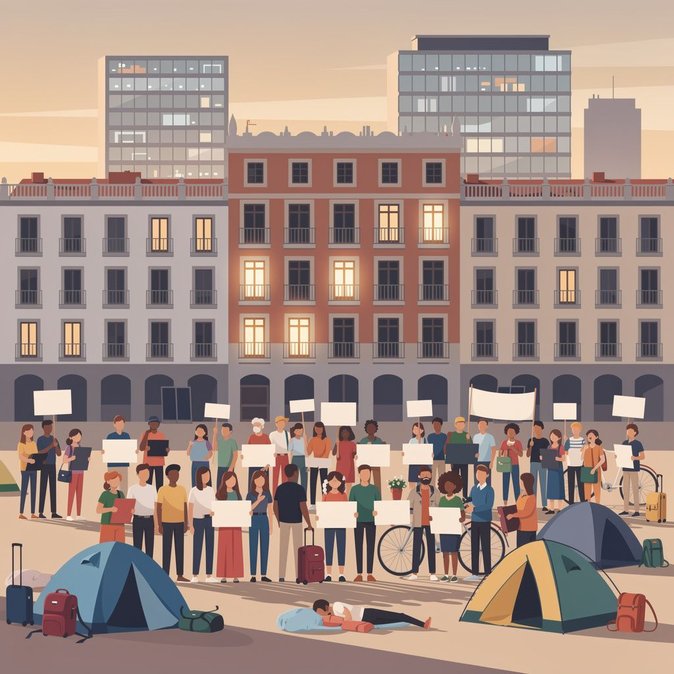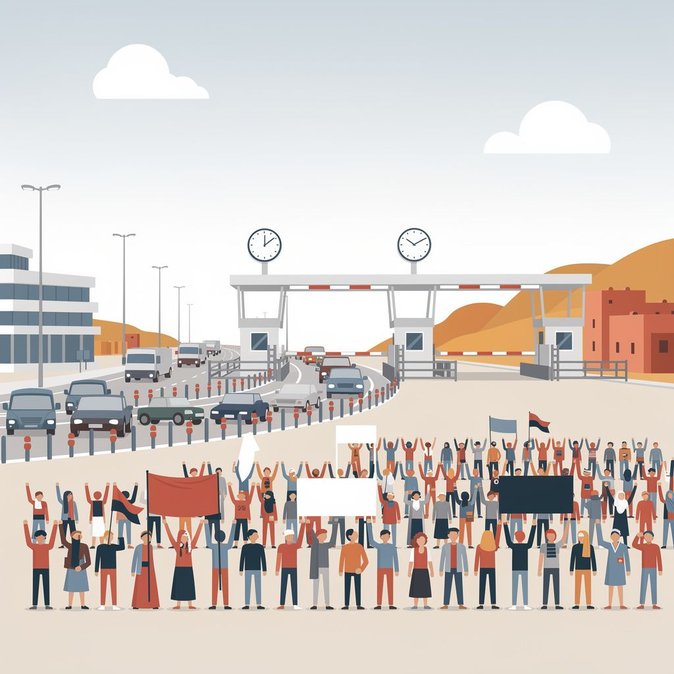
CEUTA — Roughly 600 residents, many draped in Spanish flags and chanting “¡Fronteras seguras ya!”, walked the four-kilometre road from downtown Ceuta to the El Tarajal crossing on Sunday afternoon. The grass-roots march was organised via local WhatsApp groups after videos showing new attempts to scale the fence circulated on social media last week. Protesters accuse Madrid of having left the North-African enclave “unprotected” since 70,000 people entered on 30-31 July, overwhelming the security forces and reception system. The demonstration unfolded peacefully but forcefully. Women at the front carried a banner reading “No es inmigración, es una invasión”, while others shouted slogans against Prime Minister Pedro Sánchez and Ceuta’s central-government delegate Miguel Ángel Pérez Triano. On arrival at the border, participants briefly sat on the N-352, blocking traffic for half an hour until the National Police persuaded them to clear the carriageway. Organisers read a manifesto calling for: 1) the immediate deployment of additional Guardia Civil riot units; 2) permanent aerial surveillance of the break-water; and 3) accelerated returns of migrants not entitled to protection. They also demanded EU funding equivalent to that granted to Greece for the Evros frontier. While no incidents were reported, the protest underscores the rising public pressure on the Interior Ministry, which last week sought EU help to “streamline emergency procedures” during mass influxes. Business travel managers with staff posted in Ceuta should anticipate sporadic road closures on the N-352 and potential checkpoint slow-downs as police presence is reinforced. Employers moving personnel through the Tarajal corridor are advised to monitor the Delegación del Gobierno’s Telegram channel for real-time updates and factor extra time for vehicle inspections. Politically, Sunday’s march shows the migration crisis resonating beyond border management and spilling into domestic electoral debate. With regional elections due in May 2027, both the conservative PP and far-right Vox have vowed to make “secure borders” a campaign pillar. Corporate mobility teams should therefore prepare for policy volatility—ranging from tighter entry screening to new registration requirements for non-EU assignees—in the coming months.
Source: Europa Press