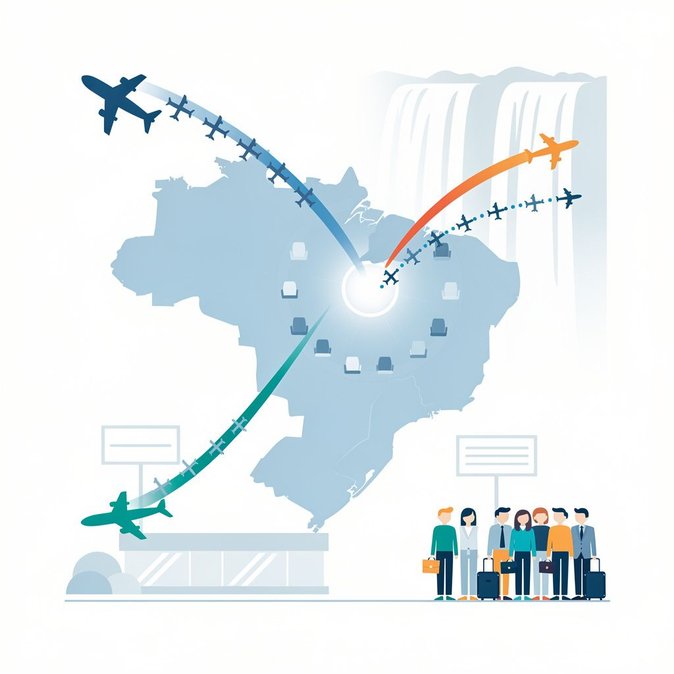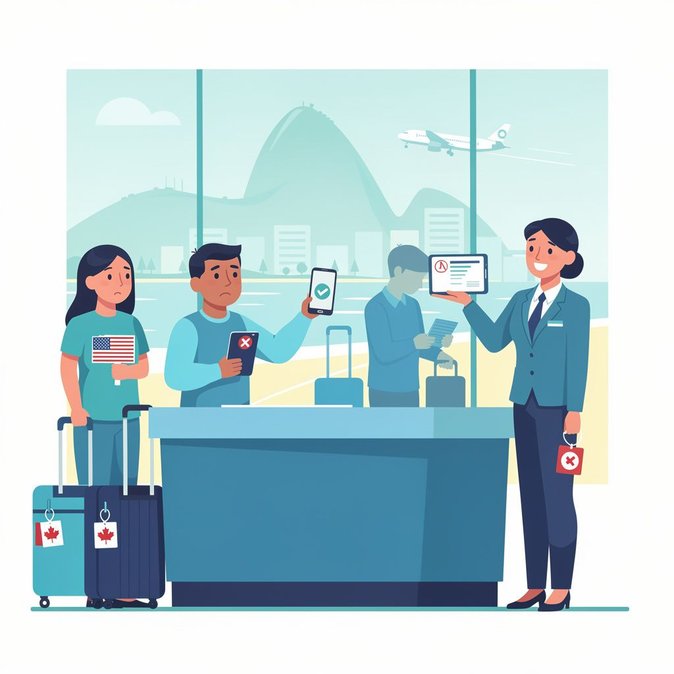
The Brazilian Ministry of Foreign Affairs has reminded airlines and travellers that, as of 8 October 2026, strict “no-visa-no-boarding” rules now apply to passengers carrying United States, Canadian or Australian passports. The notice follows a spike in cases in which long-haul passengers arrived without the required electronic visa (eVisa) and were denied entry, forcing carriers to shoulder fines and repatriation costs. Under the reciprocal policy re-introduced earlier this year, nationals of the three countries must obtain an eVisa before departure. The process is entirely digital and costs US$ 80.90; once issued, the visa is valid for multiple entries over ten years. Brazilian officials stress that the authorisation must be finalised before check-in, as ground staff are now required to verify the QR-coded visa page alongside the traveller’s passport. Airlines operating between North America, Australia and Brazil have updated their departure-control software to include automatic eVisa validation. Carriers that board non-compliant passengers face fines of up to R$ 12,000 per traveller under Article 113 of the Migration Law, in addition to the cost of return transport. Industry sources told Travel & Tour World that at least six passengers were refused boarding at Dallas/Fort Worth and Vancouver in the past week. For corporate travel managers, the stricter enforcement means verifying eVisa status during trip approval and educating employees who may be used to Brazil’s pre-2019 visa-waiver regime. Tour operators are advising North-American holiday-makers to apply at least two months before the southern-hemisphere summer peak to avoid processing-time bottlenecks. While the eVisa has cut consular visits, it has not eliminated Brazil’s right to refuse entry on public-health or security grounds; proof of yellow-fever vaccination is still recommended for travellers coming from risk areas. The ministry has hinted that fully biometric, visa-on-mobile functionality could be piloted for the 2027 Pan-American Games, but officials insist that reciprocity will remain the guiding principle. Unless Washington, Ottawa and Canberra waive visas for Brazilians, the requirement for their citizens is unlikely to disappear.
Source: Travel and Tour World