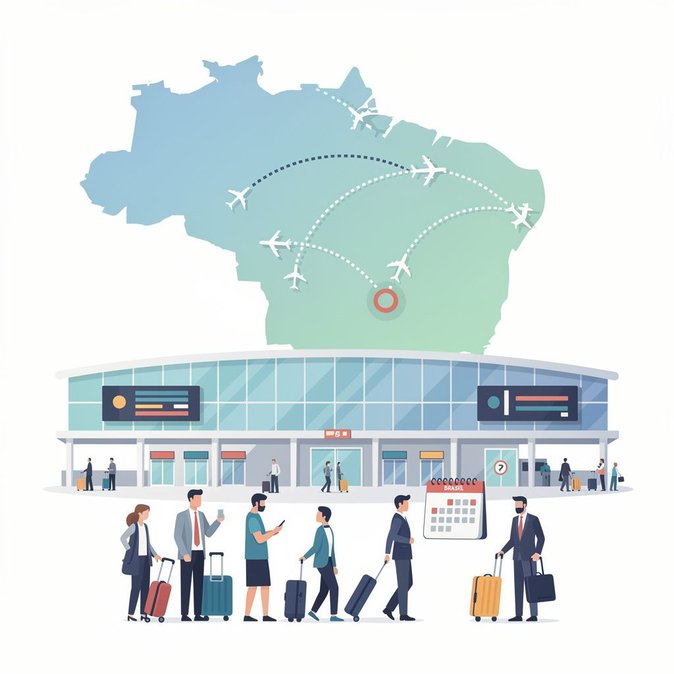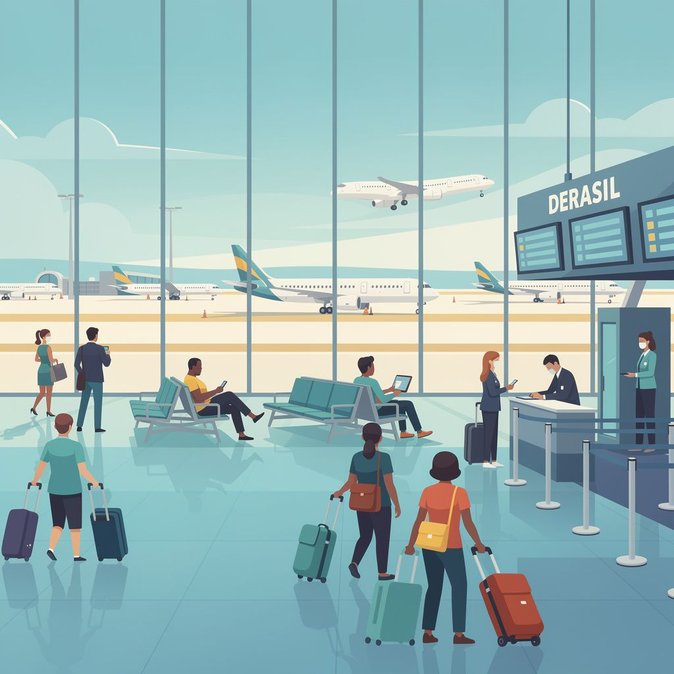
Brazil’s main points of entry continue to run at full capacity despite the surge in domestic and international departures that traditionally precede the 12 October Children’s Day long-weekend. A fresh alert issued on 11 October by risk-monitoring platform A1 reports that Guarulhos (GRU), Galeão (GIG), Congonhas (CGH) and Brasília (BSB) handled the increased passenger flow without large-scale delays or cancellations in the past 24 hours. Regional airports such as Viracopos, Belém and Blumenau are expected to see heavier queues because of religious festivities (Círio de Nazaré in Belém) and leisure travel, but no strike action or security bottlenecks are anticipated. The Civil Aviation Authority (ANAC) has been working with airport concessionaires to apply the new consumer-protection rules of Resolution 813/2026, which tighten information duties when delays exceed 30 minutes. Airlines have therefore been issuing proactive SMS and app notifications, allowing travellers to adjust itineraries early. Ground handlers have also boosted staffing, anticipating a 15–18 % jump in baggage volumes compared with an ordinary October weekend. For business-travellers, the benign operational scenario means connections to secondary Brazilian cities should hold, preserving tight schedules for site visits and meetings scheduled right after the holiday. Multinationals with mobile workforces have nonetheless been advised to reconfirm hotel allotments because occupancy around coastal resorts and key religious sites is nearing 90 %, pushing room rates up by as much as 35 % year-on-year. The alert also warns of indirect knock-on effects from external events. An attack that shut Riyadh Airport on 10 October has forced some cargo carriers to reroute Asia–South America freight through European hubs, with limited impact on passenger belly-hold capacity so far. Logistics teams are being told to flag any time-critical imports that might now arrive one to two days later than planned. Practical tip: human-resources and travel managers should remind employees to arrive at least two hours early for domestic flights and three hours for international departures during the 11–15 October peak. Given the price spikes, last-minute ticket changes are likely to be expensive; securing corporate fares in advance or allowing virtual attendance for non-essential meetings can help contain costs.
Source: A1 Travel Alerts