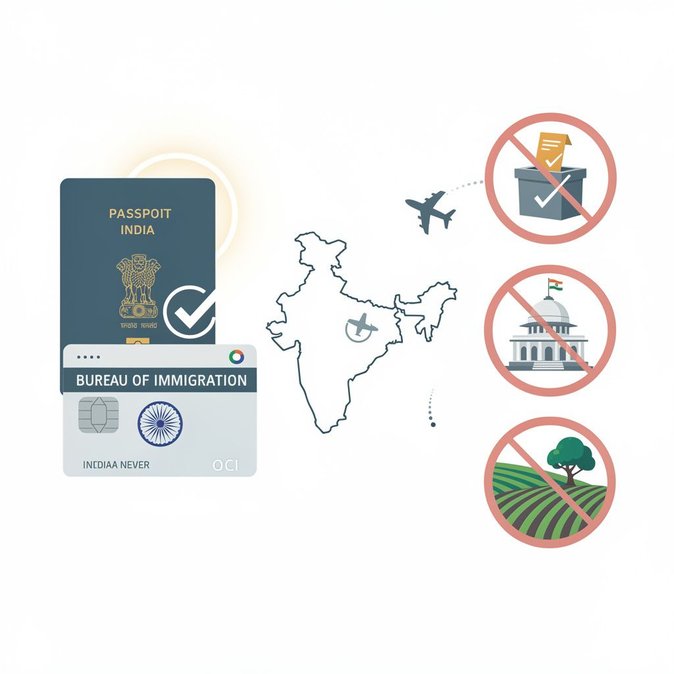
India’s Bureau of Immigration (BoI) took to X (formerly Twitter) on 16 October to publish an illustrated advisory spelling out what Overseas Citizen of India (OCI) status does—and does not—entitle card-holders to. The post, quickly amplified by mainstream outlets such as Moneycontrol, emphasises the headline point that “OCI cardholder ≠ Indian citizen.” The reminder details the extensive benefits that still make OCI status attractive for the Indian diaspora: lifetime visa-free entry (except in certain foreign-spouse cases); exemption from police registration; parity with domestic citizens on domestic airfares and entry fees to monuments; and parity with Non-Resident Indians (NRIs) for university entrance examinations and property transactions (other than agricultural land). At the same time, it lists the constitutional and political rights that remain off-limits—voting, contesting elections, holding public office or key government posts, and acquiring farm or plantation land. While none of the points are new in law, immigration lawyers say the timing is significant. Several high-profile court cases this year have seen OCI holders test the boundaries of their status, from attempts to buy farmland in Goa to bids for reserved university seats. By restating the ground rules in plain language, BoI is seeking to pre-empt litigation and ensure frontline officials apply the Citizenship Act (1955) and subsequent rules consistently across FRRO offices. For multinational employers, the advisory is a useful compliance tool. HR teams that sponsor foreign nationals on assignment to India often rely on OCI status (or the spouse’s OCI) for long-term mobility. Companies should review the clarified restrictions—particularly the ineligibility for public employment—to avoid inadvertently placing expatriates in restricted roles. Travel managers should also note the continued exemption from registration, which can simplify project timelines in India’s second-tier cities where FRRO appointments are scarce. Finally, the public advisory underscores the growing role of social media in India’s immigration governance. BoI has been steadily expanding its digital communication since the Immigration and Foreigners Act, 2025 came into force, using X and WhatsApp channels to push real-time updates on e-visas, DigiYatra, and fast-track immigration gates. Stakeholders would do well to monitor these channels alongside official gazette notifications.
Source: Moneycontrol