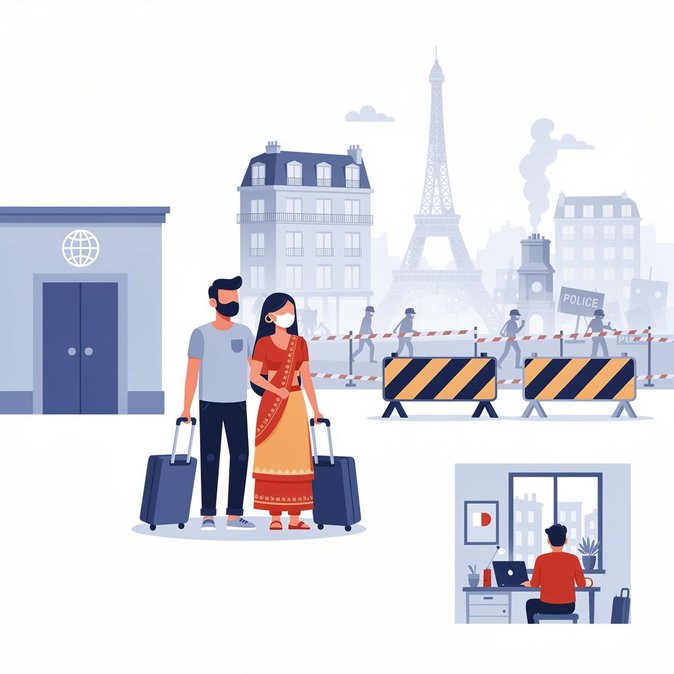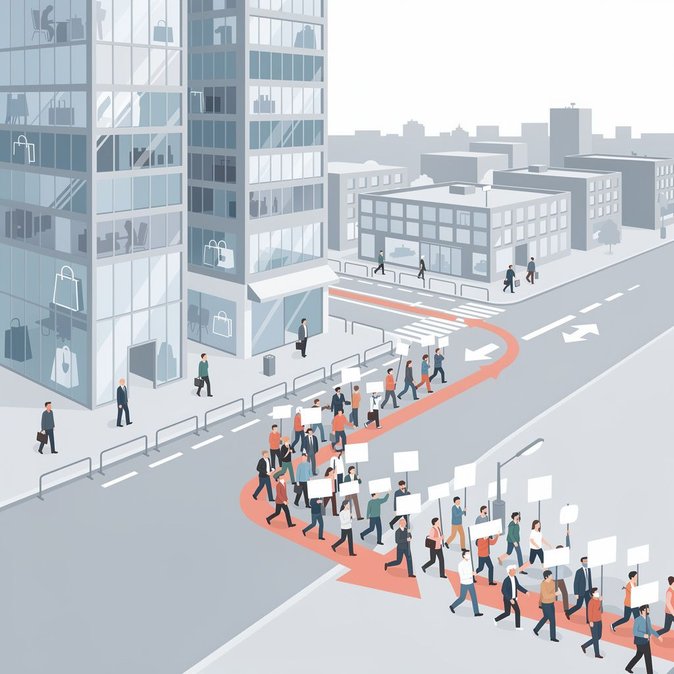
Speaking after an emergency security council meeting on 22 October, President Emmanuel Macron said authorities would continue to authorise trade-union marches but could reroute them away from commercial hubs to “guarantee the freedom to work.” The comment follows a week of unrest that damaged more than 600 shops and offices nationwide. Under France’s Public Gatherings Code, prefects can modify an approved demonstration’s route for reasons of public order. Macron’s statement indicates a willingness to use this power systematically, a shift that could see marches diverted from Paris’s La Défense, Lyon Part-Dieu and Marseille’s La Joliette—areas dense with corporate HQs and co-working spaces. Business-travel analysts say predictable, pre-announced routes have historically allowed companies to plan around protests. A late reroute, by contrast, can strand employees or block coach access to rail stations. Travel-management companies (TMCs) may need to issue same-day alerts and update ground-transfer bookings in real time. Civil-liberties groups warn that aggressive rerouting could face court challenges, but legal proceedings rarely conclude before the marches take place. In practice, multinational employers should reinforce real-time security monitoring and advise staff not to rely on habitual commuting paths when large demonstrations are scheduled. The president’s stance suggests that mobility restrictions will likely persist into November’s planned national strike day, underscoring the importance of agile contingency planning for both domestic and inbound corporate travel.
Source: MarketScreener