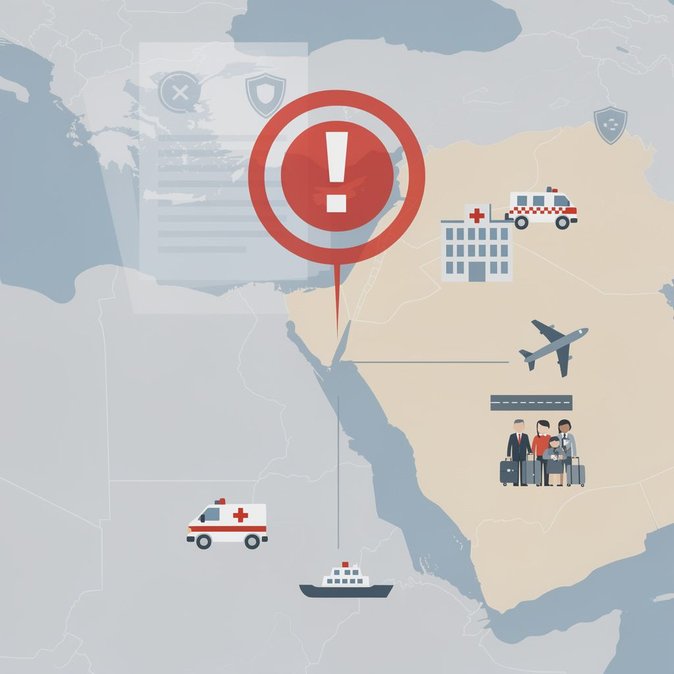
On October 22, the U.S. Department of State refreshed its destination page for Gaza, retaining the highest Level 4 “Do not travel” warning but adding new language on medical-evacuation challenges and limited emergency services. The update, posted amid escalating regional tensions, underscores that the U.S. government cannot provide routine or emergency consular assistance in Gaza and that border crossings with Israel and Egypt may close without notice. While Gaza is not a mainstream corporate assignment hub, the advisory matters to global-mobility programs because employees on regional rotations—particularly journalists, NGO staff, and energy-sector contractors—may transit through Israel or Egypt en route to Palestinian territories. The amended guidance urges travelers to stockpile supplies for an “indefinite stay,” obtain medical-evacuation insurance, and enroll in the Smart Traveler Enrollment Program. Companies maintaining duty-of-care tracking systems should immediately refresh risk-mapping data to reflect the update. Insurance brokers report that several underwriters have tightened policy wording for war-risk exclusions in Gaza and adjacent areas; premiums for extraction coverage have risen 20-25 percent this quarter. The advisory also interacts with U.S. export-control rules. Firms shipping dual-use equipment, such as satellite phones or encrypted laptops, must verify licensing requirements under the Export Administration Regulations, as the State Department flags strict local controls on communications devices. Human-resources departments should circulate the revised guidance to any employees on temporary duty in Israel who might cross into Gaza and ensure crisis-management vendors have accurate contact rosters. Failure to follow official travel advice could expose employers to negligence claims under U.S. corporate duty-of-care standards.