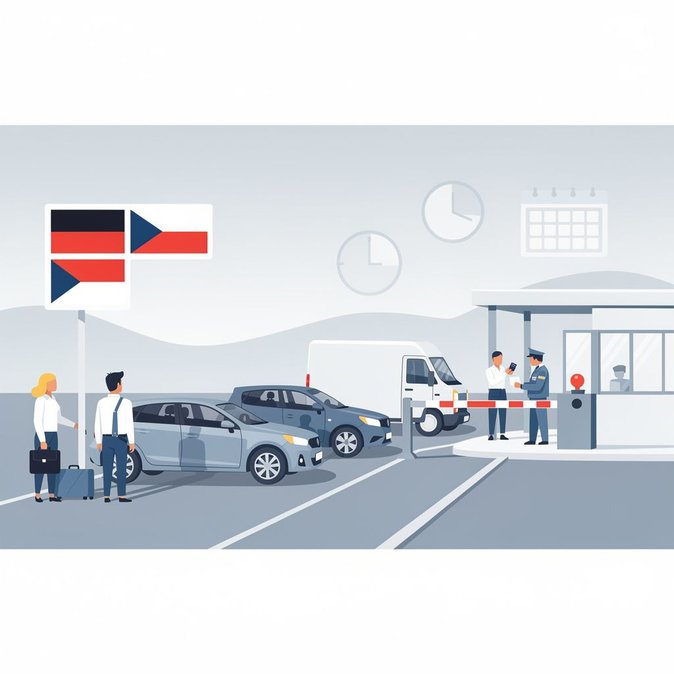
Germany’s Foreign Office and Austria’s Ministry for European and International Affairs both refreshed their online travel pages on 11–12 November, underscoring that temporary border controls remain in force on routes into their territories from Czechia. The German notice, aimed at citizens resident in Prague, warns of “flexible, situation-dependent” checks and recommends that travellers always carry a passport or national ID, even for short shopping trips. Austria’s bulletin, dated 12 November, keeps its security level unchanged but reminds drivers to expect random checks until at least 15 September 2026 and to have valid documents at all times. Although primarily information updates, the advisories have operational consequences for mobility managers. Employers sending staff to Germany or Austria on same-day assignments should ensure that employees have their travel documents on hand and allow for potential inspection stops, which can add 20–40 minutes to journeys on the A17, A6 and A3 corridors. The German note also highlights the winter-tyre obligation now in force through March—crucial for fleet managers dispatching vehicles across the Ore Mountains or Bayerischer Wald. Immigration advisers point out that routine carriage of passports may feel burdensome for EU nationals accustomed to ID-free travel, but failure to present a document can lead to fines or refusal of entry. Companies running shuttle buses for cross-border staff are already printing laminated “travel checklists” in Czech and German to speed up inspections. The advisories do not alter visa-free movement rules: EU and Schengen nationals may still enter without visas for short stays; non-EU citizens must continue to respect 90/180-day limits and carry residence permits where applicable. Nonetheless, the messaging signals that Schengen’s political reality remains in flux and that compliance routines once reserved for external borders have migrated inward.