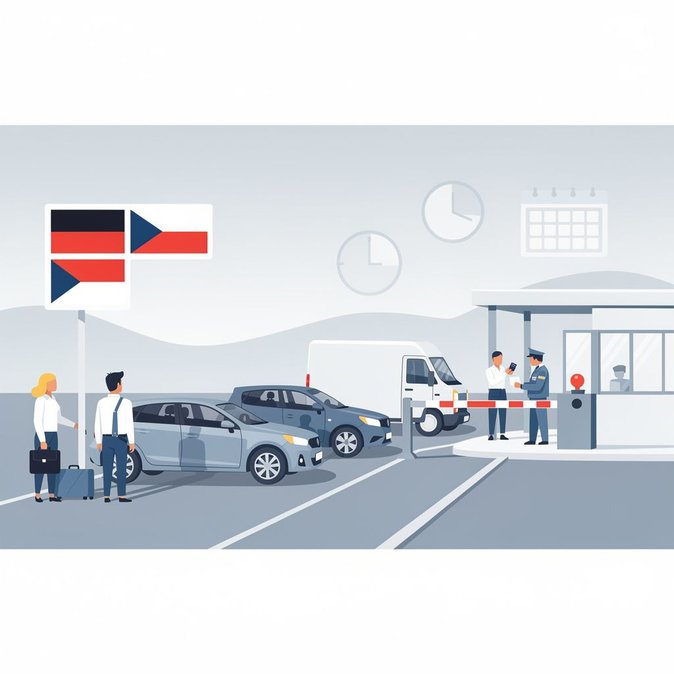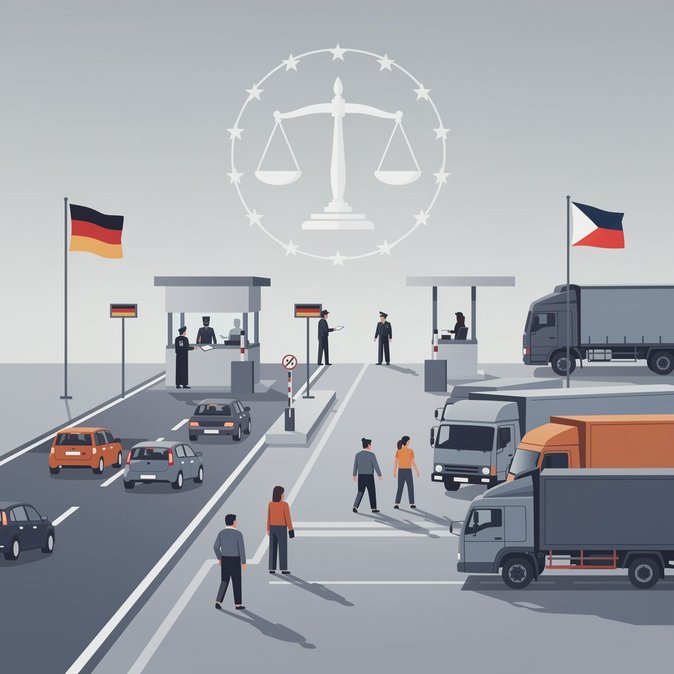
A landmark legal challenge heard on 11 November in Dresden could reshape the way thousands of people and tons of goods cross the Czech-German frontier each day. The Saxon Administrative Court considered two separate complaints from travellers who say the Federal Police had no legal basis to stop them while entering Germany from Czechia and Poland. Both incidents took place at well-used crossings—Breitenau/Krásný Les on the D8 motorway and the Görlitz/Zgorzelec city bridge—and involved routine document checks and a short search of a vehicle’s boot. The claimants argue that the measures breach Articles 22–25 of the Schengen Borders Code, which allow the re-introduction of internal border controls only in the face of a “serious threat” to public order or internal security and require that checks be non-systematic and proportionate. They also cite earlier judgements in other German states that found comparable spot checks unlawful. The Interior Ministry, by contrast, insists the controls are justified by continued irregular migration and people-smuggling along the Central European corridor. Since October 2023 Germany has gradually expanded fixed and mobile controls to all its land borders, including the 815-kilometre frontier with Czechia. What began as a six-month “temporary” measure has been extended several times; Interior Minister Alexander Dobrindt now plans to keep the regime in place until at least March 2027. Business groups in northern Bohemia complain that drivers lose up to 90 minutes daily, while Czech manufacturing plants near the border report higher logistics costs and difficulty scheduling just-in-time deliveries. A ruling is expected within weeks. If the court finds the stops unlawful, Berlin could be forced either to appeal to the Federal Administrative Court or to rethink the scope of its controls. Lawyers for the plaintiffs say they are prepared to escalate the matter to the European Court of Justice should the national judiciary fail to remedy what they see as a systemic breach of Schengen law. For Czech firms that rely on unobstructed access to Germany—the country’s largest trading partner—the outcome will determine whether the current “hard” border becomes a long-term fixture or an historical footnote. In the meantime, companies moving staff or goods across the frontier should build extra time into travel schedules, ensure that employees carry valid passports or ID cards, and monitor any further announcements from both governments.
Source: Tagesschau