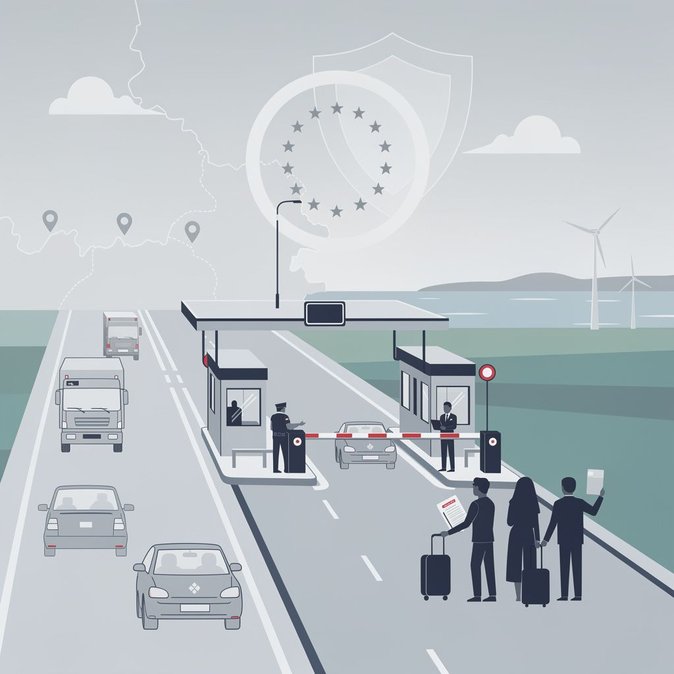
The European Commission’s updated Schengen notifications list, published on 12 November 2026, confirms that Denmark has prolonged temporary controls at its land and maritime frontiers with Germany for another six months—from 12 November 2026 to 11 May 2027. Copenhagen cites an elevated threat of sabotage against critical infrastructure and continued terrorism-related concerns. Although the Danish checks take place on the northern side of the frontier, the measure directly affects German-based exporters, commuters and service technicians who cross via the A7/E45 corridor or the frequent ferry routes between Schleswig-Holstein and Jutland. Travellers should expect sporadic document inspections and occasional lane closures that can add 15-30 minutes to journey times. The extension comes as Germany itself maintains controls on all its land borders, creating a double layer of scrutiny for cross-border traffic. Logistics operators running just-in-time deliveries between Hamburg and Aarhus report having to reschedule overnight slots to keep to EU driving-time rules. Airlines using the Copenhagen–Hamburg shuttle are preparing for potential secondary screening of ground staff transferring between landside and airside zones. Corporate mobility teams should update travel policies to reflect the new end date and remind employees that national ID cards or passports remain mandatory—even on normally control-free Schengen routes. Goods carriers may wish to carry T2 transit forms to speed up customs differentiation checks, which Danish police sometimes perform alongside security questions. Strategically, the move signals that internal Schengen controls, once exceptional, are becoming semi-permanent. Businesses with cross-border staff rotations should build extra lead time into assignment planning and consider remote-work alternatives where possible, pending a broader EU debate on phasing out long-running controls.