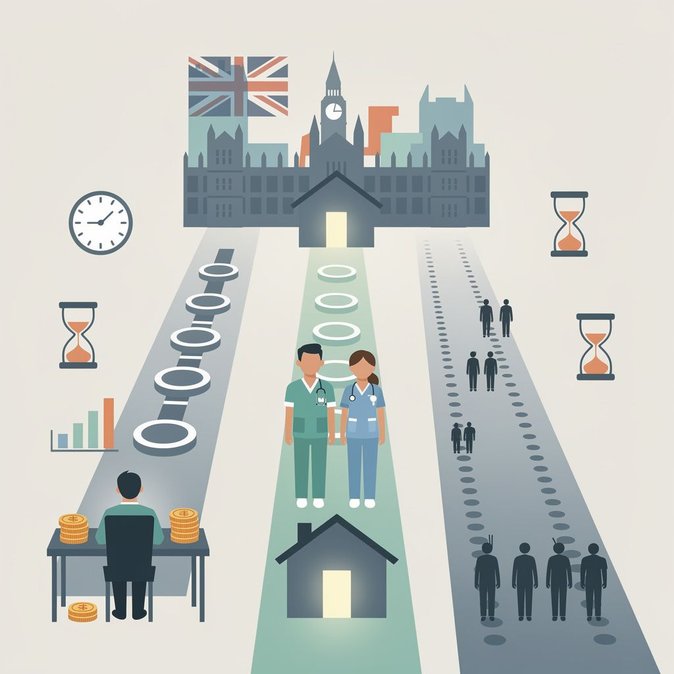
Home Secretary Shabana Mahmood will today present revised immigration rule changes to Parliament, after last year’s plan to triple qualifying periods for some migrants drew accusations of being “un-British”. According to briefings overnight, Mahmood’s statement will keep the headline move from five to ten years before most work-route migrants can apply for Indefinite Leave to Remain (ILR), but will drop the 15-year wait for care-sector staff. The plan will also confirm a 30-year qualifying period for people who arrive irregularly, including by small boat, and revive a power to deny settlement to foreign nationals convicted of serious offences even if they have served their UK sentence. Ministers say the reforms are designed to "shift the system away from permanent immigration" and encourage employers to invest in training British workers. Companies that sponsor staff will face tougher salary upratings and an annual skills surcharge; Whitehall sources suggest the surcharge will double for sectors on the Shortage Occupation List. Mahmood will argue that the package strikes a balance between the economic need for international talent and public concern over net migration, which hit a record 880,000 last year. Opposition parties and business groups are split. The CBI warns that lengthier routes to settlement could deter high-skilled recruits, particularly in AI and life sciences, where global competition is fierce. The care sector—where one in four workers is foreign-born—has welcomed the climb-down from 15 to 10 years but says visa fees and the Immigration Health Surcharge still risk exacerbating staff shortages. For mobility teams the immediate issue is timing: if the Home Office sticks to past practice the new qualifying periods could apply to people already in the UK when the rules come into force, forcing employers to budget for multiple visa extensions they had not anticipated. Specialist legal advice should be sought for any staff on five-year ILR pathways that will not complete before 2027. HR should also prepare messaging for recruits who may read headlines about "30-year waits" and assume it applies universally. Once the statement is made the draft statutory instrument will be laid within days, leaving only a short window to lodge any urgent ILR applications under the existing rules.
Source: Sky News – Politics Live Blog