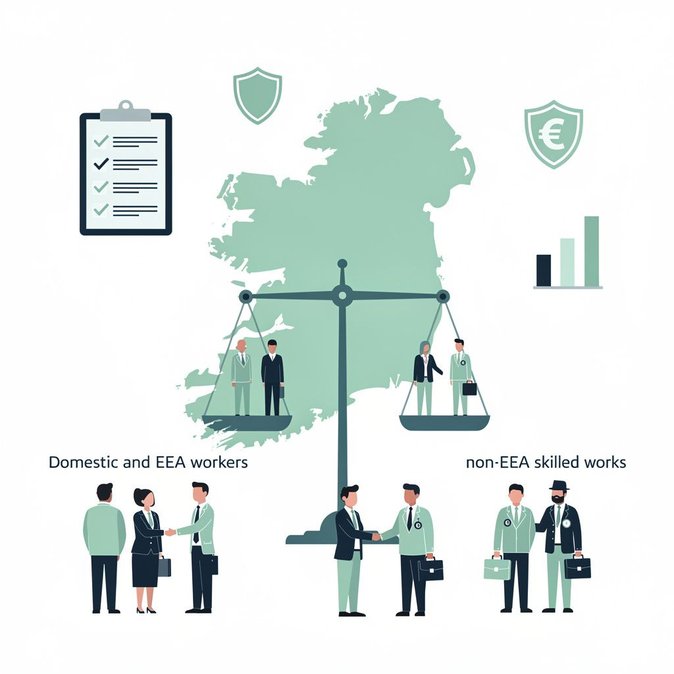
The Department of Enterprise, Trade and Employment (DETE) has released the General Scheme of the Employment (Miscellaneous Provisions) Bill 2026, the blueprint for what officials describe as the “most significant refresh” of Ireland’s employment-permit framework in a decade. At its heart is a proposal to soften the so-called 50:50 rule—which currently obliges most firms to maintain a workforce made up of at least 50 % European Economic Area (EEA) nationals before they may sponsor a non-EEA employee. Policymakers say the rule, introduced in 2014 at the height of the economic recovery, no longer reflects a labour market in which critical-skills shortages range from cybersecurity specialists to healthcare professionals. If enacted, the Bill would give ministers power to vary the 50:50 threshold by sector or region in response to demonstrable skills gaps. DETE emphasises that no immediate change occurs on publication of the Scheme, but HR teams should begin mapping current headcounts and future-hire pipelines against several scenarios. Multinationals that rely on large numbers of third-country nationals—especially in tech, pharmaceuticals and agri-food—stand to benefit, while SMEs with small domestic workforces will gain new headroom before hitting compliance limits. Other headline measures include streamlined Labour Market Needs Test rules, a statutory appeals process for refused permits, and alignment of salary thresholds to the State’s new living-wage trajectory. The Scheme also floats technical amendments designed to future-proof the legislation against emerging work models such as cross-border remote work and intra-EU virtual assignments. Legislators will now scrutinise the Scheme in committee before a full Bill is drafted in early 2027. Employers should keep detailed records of recruitment efforts, as the Oireachtas is expected to tighten audit powers alongside increased flexibility. Immigration advisers recommend building transition plans that model both a phased introduction from mid-2027 and a “big-bang” commencement date should the Government opt for rapid implementation. For global mobility managers, the message is clear: Ireland is moving toward a more responsive, skills-based system, but businesses must prepare for new reporting duties and possible quota mechanisms that could accompany greater access.
Source: DailyDigest.ie