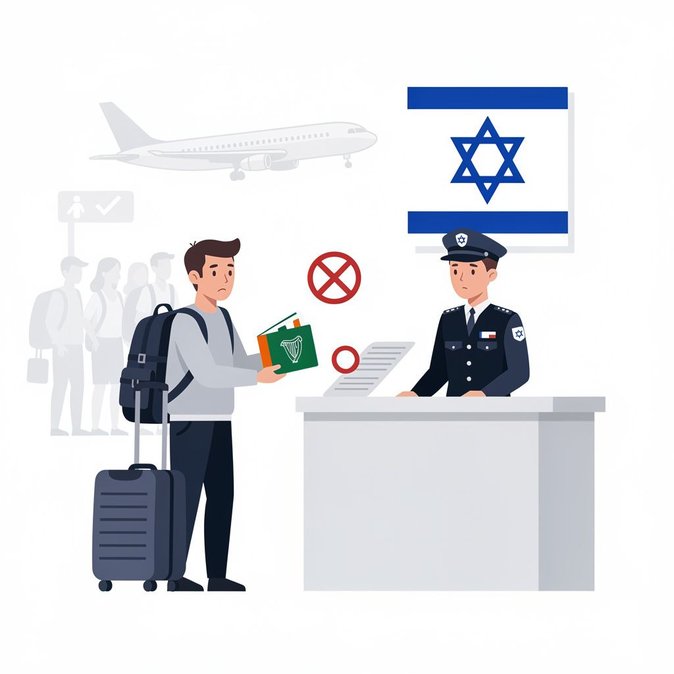
An investigation by The Journal reveals that the number of Irish citizens refused entry to Israel has almost doubled since 2023, with at least 19 people turned away so far in 2026. Israeli authorities have tightened screening in the wake of the 7 October 2023 attacks, introducing mandatory electronic travel authorisation (ETA-IL) checks even for visa-exempt nationals such as Irish passport-holders. Official statistics show that refusals now affect roughly one in every 73 Irish visitors—up from one in 900 three years ago. Advocacy groups say the spike includes tourists, journalists and even an EU delegation chair, Sinn Féin MEP Lynn Boylan, who was denied entry last year. Ireland’s Department of Foreign Affairs maintains a “do not travel” advisory for Gaza and “avoid non-essential travel” for Israel, but has not updated its general Israel travel advice since the new ETA-IL system went live in August. Travel-risk consultants urge companies to brief staff on tougher questioning at Ben Gurion Airport and to avoid openly political social-media posts before departure. For global-mobility programmes, the key operational impact is the heightened likelihood of refused entry and deportation costs. Employers should ensure travellers have local contacts’ details, proof of onward travel and verifiable hotel bookings. Long-term assignees may need to carry additional documentation proving purpose of stay, particularly if entering via Jordanian land borders. Analysts say the tightening reflects a broader regional security environment and note that similar ETA systems are scheduled for roll-out across the EU (ETIAS) in 2027—reminding Irish businesses that electronic travel screening is becoming the global norm.
Source: The Journal