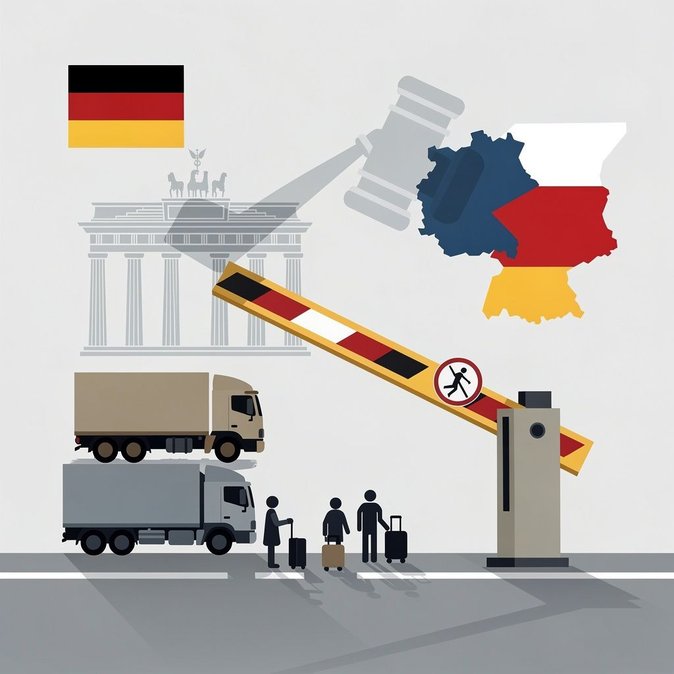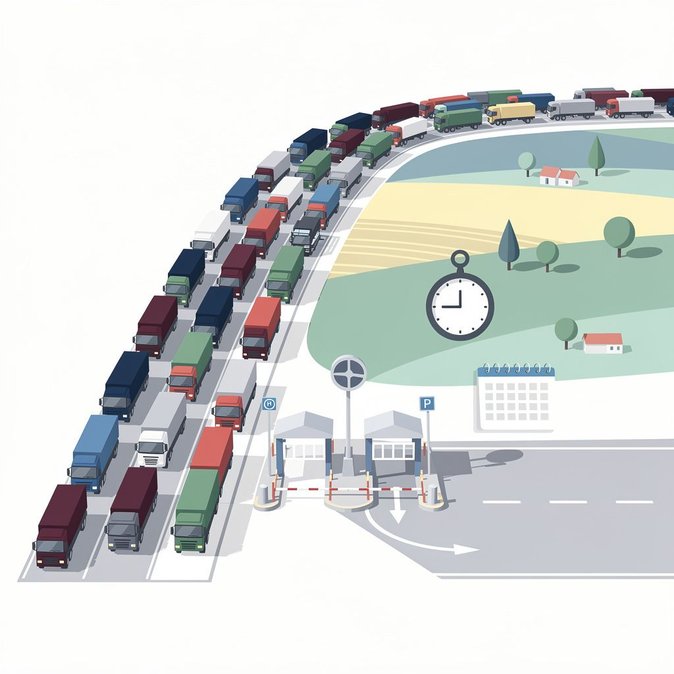
Poland’s Interior Ministry has released fresh statistics on the temporary controls re-introduced at land borders with Germany and Lithuania on 2 October 2026. According to a ministry update published on social media late Saturday, Border Guard officers checked almost 44,400 travellers and 22,400 vehicles between 6 and 12 November. The data show 42 refusals of entry—27 on the German frontier and 15 on the Lithuanian side—while no attempts to cross illegally from Belarus were detected during the same week. Officers also conducted 1,500 residence-status inspections and 480 employment-compliance checks inside the country, leading to more than 220 voluntary departures by foreign nationals. The government says the controls remain necessary to counter people-smuggling networks exploiting the EU’s eastern flank. They are authorised until 30 March 2027 and can be extended in two-month increments with parliamentary consent. Travellers arriving by road continue to face spot checks, though queues have generally remained under 30 minutes at major crossings. For employers rotating personnel through Poland’s western production corridor, the figures offer reassurance that freight flows are largely unaffected. Nonetheless, mobility teams should remind travellers to carry passports or national ID cards and to allow buffer time when driving from Berlin or Vilnius to meetings in Poznań or Warsaw. Transport firms should also ensure that third-country drivers hold valid work permits, as inland inspections have intensified. The ministry promised to publish weekly dashboards combining border data with inland enforcement results, signalling a more transparent approach that may help build public support for the controversial measure.