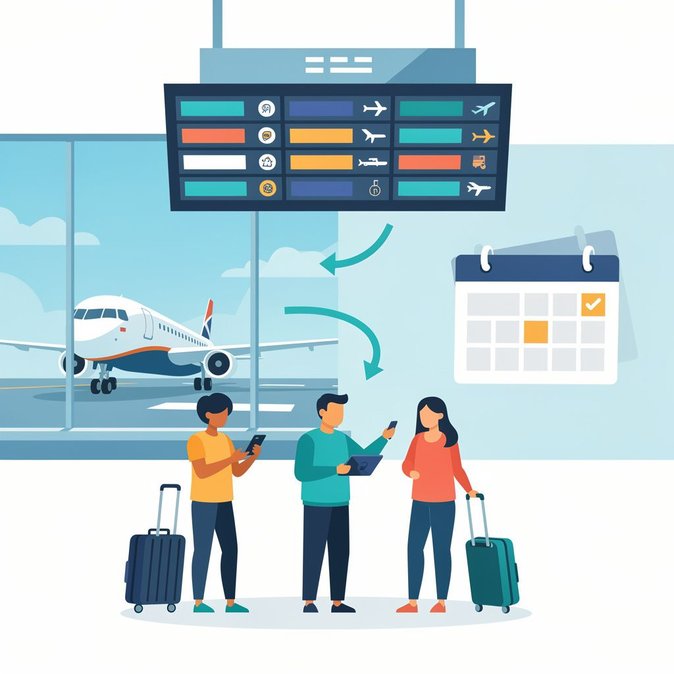
Commercial aviation across the United States lurched back to life on Sunday after the Federal Aviation Administration (FAA) lifted a rare, four-hour nationwide ground stop that began late Friday. Officials said the emergency halt was triggered when a software upgrade overloaded aging switching equipment at several Air Route Traffic Control Centers, causing intermittent radar and voice-communication gaps that escalated into a safety risk. More than 4,000 aircraft already in the sky were shepherded to safe landings using established loss-comms procedures, while every departure was held on the ground. The cascading disruption rippled through the weekend, cancelling or delaying over 18,000 flights and stranding hundreds of thousands of passengers. Airports in New York, Chicago and Atlanta reported security-line backups stretching into parking garages, and hotels near hub airports quickly sold out as airlines ran out of duty-time crews. Some carriers chartered buses to reposition pilots and flight attendants so Sunday’s first-wave departures could launch. Aviation analysts noted the incident was only the third blanket grounding since 9/11—the others were in January 2023 (a NOTAM database corruption) and in April 2024 (a GPS jamming incident). While Friday’s failure was resolved within hours, recovery took two full operational days because aircraft and crews were stranded out of position. Industry group Airlines for America estimates the cost to carriers at roughly US $450 million, not including passenger compensation. For business travelers, the timing could hardly be worse: the Thanksgiving peak begins in nine days and cargo bellies were already full of holiday e-commerce freight. Logistics managers are advising multinational firms to build 48-hour buffers into U.S. itineraries this week and to prioritize video-conference alternatives for meetings that can be rescheduled. Human-resources mobility teams are also being urged to remind expatriates to register their trips with travel-risk providers in case of further disruption. Although the FAA says schedules should “fully recover by late Sunday,” airlines warn that aircraft rotations will remain fragile for several days. Travelers should use airline apps for rebooking, arrive early at airports, and consider alternative airports such as Oakland instead of San Francisco or Baltimore instead of Washington Reagan. Many major carriers have issued travel waivers allowing free itinerary changes through 17 November.
Source: Associated Press