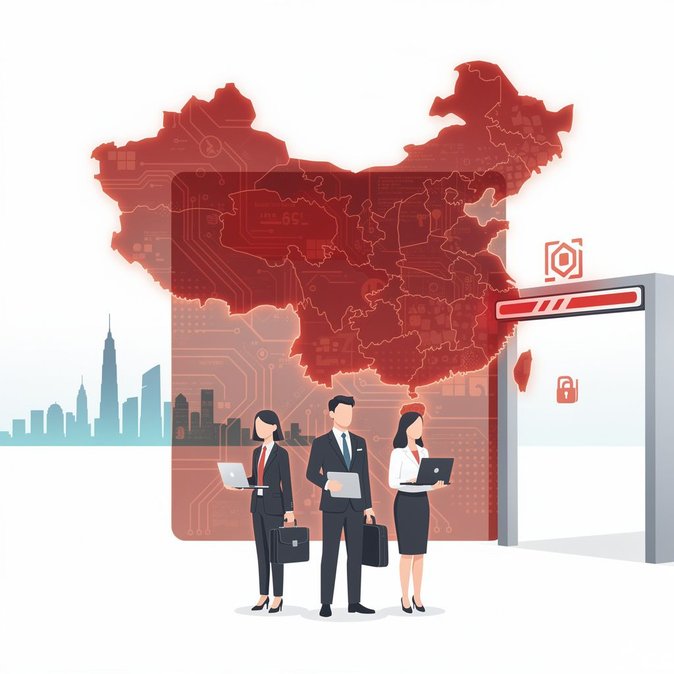
Taiwan’s Straits Exchange Foundation (SEF) revealed on 15 November that at least three Taiwanese professionals working for high-tech firms were prevented from leaving mainland China after routine business trips this year. According to Central News Agency reports, one employee was a last-minute substitute on the trip and had no prior indication of risk. Families and employers were only belatedly notified that the workers were under investigation for alleged national-security violations. The cases come two months after China’s new Exit-Entry Administration Regulations (State Council Decree 841) entered into force on 15 September. The rules explicitly authorise authorities to impose exit bans on individuals suspected of jeopardising industrial or technological security, expanding a power previously used mainly in tax or civil-litigation disputes. Legal counsel in both Taipei and Shanghai warn that the definition of “industrial security” is broad and can include perceived breaches of export-control or data-transfer rules. Multinationals sending staff into China’s semiconductor, AI or biotech sectors should reassess travel-risk protocols, ensure employees carry only compliant devices and data, and establish emergency response plans. The SEF has urged Taiwanese nationals to “carefully weigh the necessity” of travel, underscoring how China’s evolving regulatory landscape can directly affect cross-strait business mobility. Foreign companies face similar exposure, particularly those whose staff access sensitive R&D sites or dual-use technologies.
Source: ChosunBiz