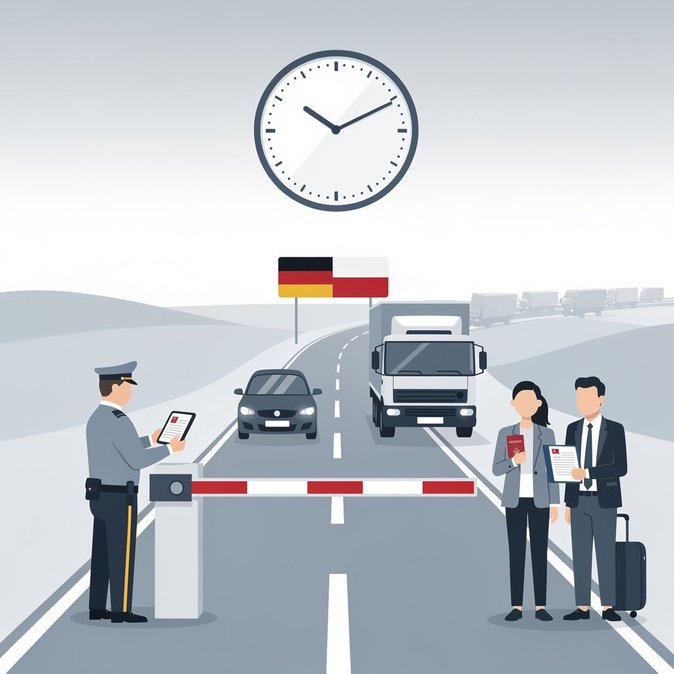
In its latest travel advisory for Poland, updated on 16 November 2026, the German Foreign Office (Auswärtiges Amt) reminds travellers that Poland has maintained unilateral border controls along the Polish-German and Polish-Lithuanian frontiers since July 2025. The note stresses that Germany is likewise conducting flexible spot checks on its side of the border, urging all cross-border travellers to carry valid passports or national ID cards at all times. Although the guidance is primarily aimed at private tourists attending Independence Day events, it has clear implications for business commuters who rely on the Schengen promise of frictionless movement. Logistics firms report waiting times of up to 45 minutes for trucks entering Germany via the A12 and A15 corridors, while rail replacement buses on the Dresden–Prague route have been pulled over for document inspections. Companies that deploy technicians or sales staff on day trips to Polish clients should pad schedules and factor in possible secondary inspections. Employers are also advised to issue multilingual assignment letters confirming the purpose and duration of travel; anecdotal evidence suggests this speeds up checks. Non-EU nationals resident in Germany must carry residence permits in addition to travel documents. The advisory highlights a broader reality: temporary internal Schengen controls – once exceptional – have become quasi-permanent in several member states. For mobility programmes this means that the traditional risk matrix (visa vs. visa-free) now needs a new variable: ad-hoc identity checks that can trigger delays, fines or even entry refusals if paperwork is incomplete.
Source: Auswärtiges Amt