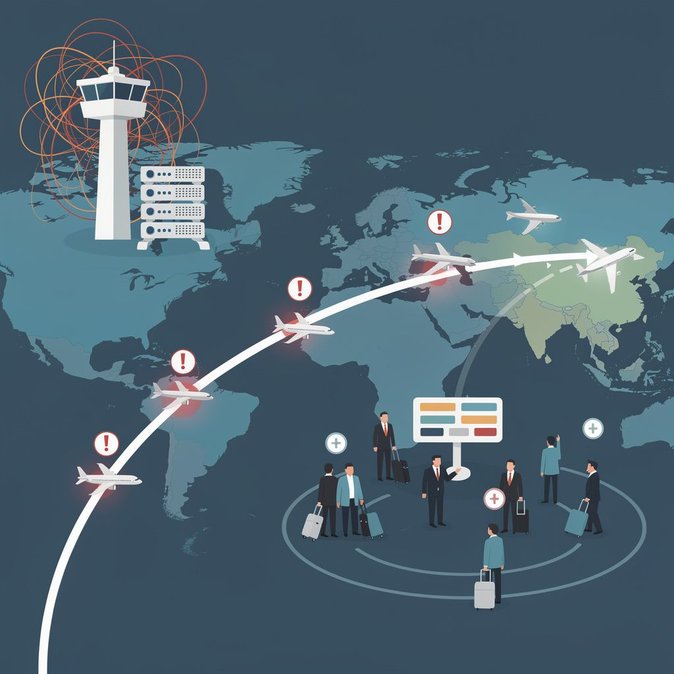
Investigators have traced last Friday’s unprecedented US-wide ground stop to a malfunctioning router being installed by network contractor L3Harris, Axios reported on 16 November. While normal operations resumed within hours, the disruption cancelled or delayed more than 12,000 flights and triggered crew-repositioning headaches that continue to ripple through global schedules. For Indian companies with offices in Silicon Valley and the East Coast, the incident was an unwelcome reminder of how US domestic infrastructure failures can upend long-haul mobility. Most nonstop India–US flights escaped the ground stop because they were already airborne, but more than 60 percent of passengers on those services rely on onward domestic connections. Over the weekend, TCS, Infosys and Wipro instructed travelling staff to add at least six hours’ buffer before important client meetings. Travel-management firms say premium cabin award seats disappeared overnight as stranded passengers re-booked. Average one-way economy fares on the Delhi–San Francisco route briefly topped ₹1.55 lakh before settling back to ₹1.20 lakh. Airlines have waived change fees but not fare differences for most India-origin itineraries. Aviation analysts note that US authorities have now disabled similar routers at 60 facilities, reducing the likelihood of a repeat. Nevertheless, Indian exporters dependent on just-in-time deliveries are reviewing contingency plans, including routing critical staff through Canada or Europe and holding more visa-ready alternates on standby.
Source: Axios