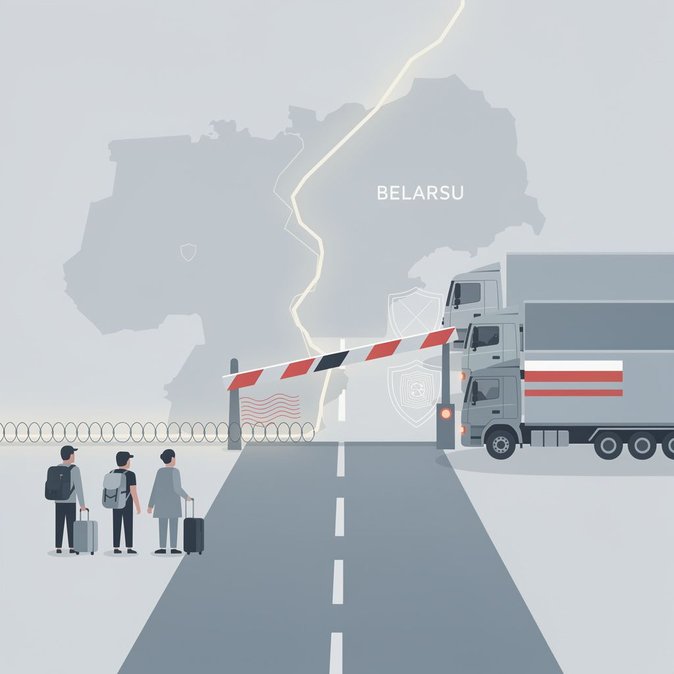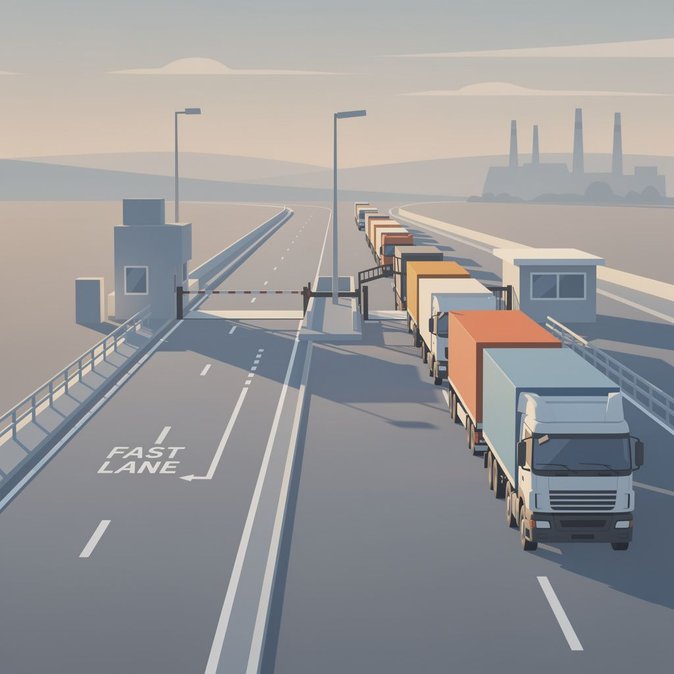
Real-time data from crowd-sourced platform KolejkaNaGranicy and the Polish Border Guard show that lorry drivers faced waits of up to five hours on 16 November at the Medyka–Shehyni and Korczowa–Krakivets crossings. The congestion, which built up overnight, coincides with a surge in pre-winter exports of construction materials and agri-food products from Poland to Ukraine, as well as humanitarian shipments moving in the opposite direction. Forwarders report that the longest delays occur on the Ukrainian side, where customs staff struggle with increased documentary checks introduced after Kyiv tightened dual-use-goods controls. While passenger car traffic moves reasonably quickly, trucks without CMR documents pre-cleared in Ukraine’s “e-Cherha” (e-Queue) system are being told to park in holding areas outside Przemyśl for several hours. The bottleneck is hurting just-in-time deliveries to factories in Rzeszów’s aviation cluster and delaying the return of empty trailers needed for the electronics plants around Wrocław. Polish haulage association ZMPD warns that day-driver schedules are being blown out, triggering overtime costs and infringing weekly-rest rules. Several logistics firms have rerouted via the Slovak-Ukrainian crossing at Vyšné Nemecké, adding 180 km and toll expenses but guaranteeing a predictable slot. Mobility managers should advise drivers to book e-Cherha slots at least 24 hours ahead and upload cargo manifests digitally. Companies moving time-critical goods—pharmaceuticals or perishable foods—should consider using the rail-rolling-road terminal in Małaszewicze or consolidate shipments into full loads to minimise idle time at the border. Poland’s Ministry of Infrastructure says it is negotiating with Kyiv to introduce a “green corridor” for EU-bound humanitarian cargo and automotive components by early December. Until then, exporters should pad lead-times and communicate delays to downstream customers.