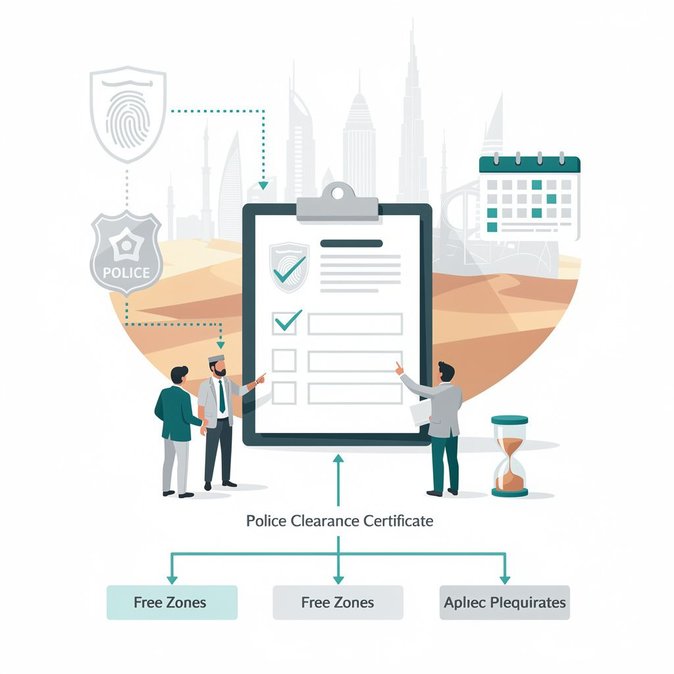
An overnight update to the visa-guidance portal UAE Inform on 16 November confirms that the Federal Authority for Identity, Citizenship, Customs & Port Security (ICP) continues to require an attested police “Good Conduct Certificate” for new work-entry permits filed for at least 25 nationalities, despite rumours that the rule would lapse on 15 November. The certificate—essentially a home-country police-clearance—must be less than three months old and legalised via a UAE embassy and the Ministry of Foreign Affairs. Free zone notices seen by UAE Inform show enforcement across employee and investor visa streams, with Ras Al Khaimah Economic Zone (RAKEZ) circulating the most detailed list. Nationalities affected include Pakistan, Egypt, Kenya, Mexico and Lithuania; India and the Philippines appear only on unconfirmed agent lists. Dubai’s GDRFA has so far not echoed the requirement, creating a patchwork compliance landscape. For global mobility teams the rule adds time, cost and uncertainty to hiring schedules. Obtaining and attesting a certificate can take four to six weeks—longer in jurisdictions without a UAE mission—potentially delaying onboarding for critical staff. Employers are therefore front-loading the document request at offer-letter stage and budgeting for express embassy processing fees. Practitioners advise applicants to keep multiple originals, as re-filings after a rejection often require a fresh upload. Translating the Arabic rejection notice verbatim is crucial: the English summary shown in the ICP portal can be generic and misleading. Renewals of an existing residence visa are usually exempt, but exceptions have been reported in some free zones. While the certificate rule aligns with the UAE’s broader push for risk-based immigration screening, stakeholders urge ICP to publish a definitive nationality table to reduce confusion. Until then, HR teams should assume the requirement applies unless an authorised typing centre confirms otherwise.
Source: UAE Inform