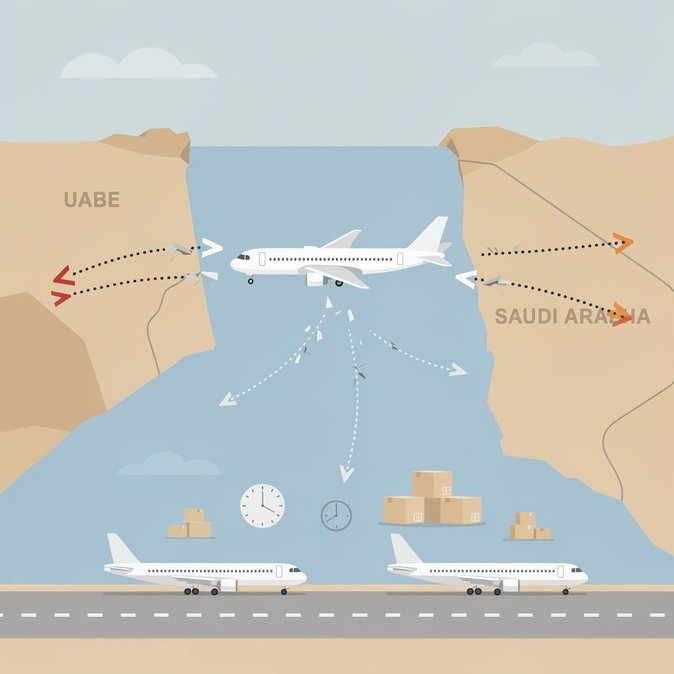
Airlines operating between the United Arab Emirates and Saudi Arabia have entered a second week of rolling schedule cuts, leaving thousands of business travellers scrambling for alternatives. Gulf News’ 17 November update shows Etihad Airways cancelling every Abu Dhabi–Riyadh and Abu Dhabi–Dammam rotation through at least 19 November, while Emirates, flydubai and Air Arabia list a patchwork of cancelled and operating services to multiple Saudi gateways, including Jeddah and Madinah. The disruption is part of a wider aviation ripple effect triggered by renewed regional security incidents around the Strait of Hormuz, drone alerts over Bahrain and a European Union Aviation Safety Agency (EASA) conflict-zone bulletin that remains in force for Gulf airspace. The bulletin does not close the skies, but European carriers must conduct stringent risk assessments before over-flying the Gulf, raising operating costs and insurance premiums. Cut flight corridors pose an immediate headache for the UAE’s corporate mobility teams. Saudi Arabia is the Emirates’ single largest outbound business market, accounting for an estimated 620,000 corporate seats a year. Oil-field technicians, retail buyers and project-management teams report resorting to multimodal routings via Doha, Muscat and Kuwait City, adding six to twelve hours to door-to-door journey times and forcing last-minute hotel stays. Logistics managers warn of knock-on delays to just-in-time supply chains serving Saudi giga-projects such as NEOM and Qiddiya. While some Saudi routes remain open—Etihad continues to fly to Jeddah, for example—the fluid security outlook means seats can disappear with a few hours’ notice. HR departments are therefore advising travellers to use fully flexible tickets, monitor airline apps, and build contingency time into itineraries. Multinationals with frequent Saudi rotations are activating “virtual assignment” policies that allow project staff to work temporarily from Dubai or Abu Dhabi hubs until the schedule stabilises. Looking ahead, mobility managers should watch three indicators: 1) whether EASA shortens or lengthens its Gulf bulletin beyond 31 January 2027; 2) whether regional carriers secure insurance waivers that could restore frequencies; and 3) whether any fresh security incident widens the current air-pocket beyond the Saudi market. Even if flights resume sooner, fare volatility is likely to persist as airlines try to claw back higher operating costs.
Source: Gulf News