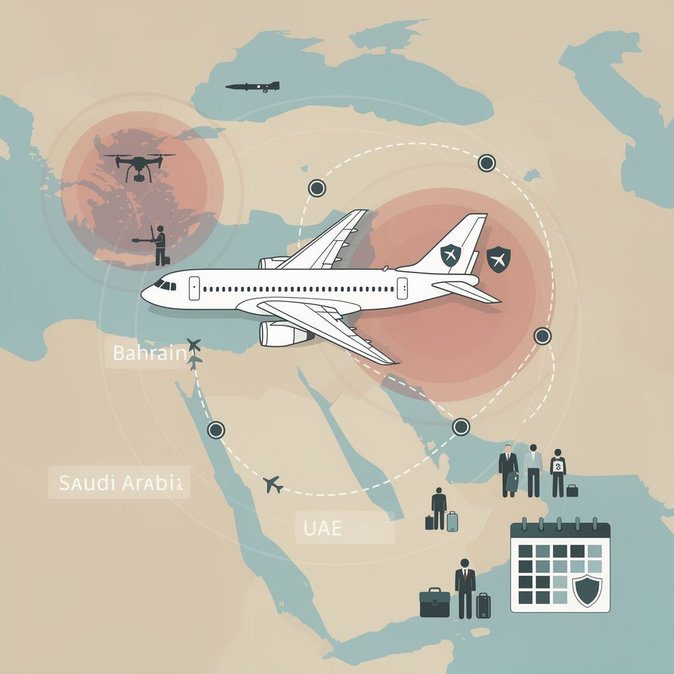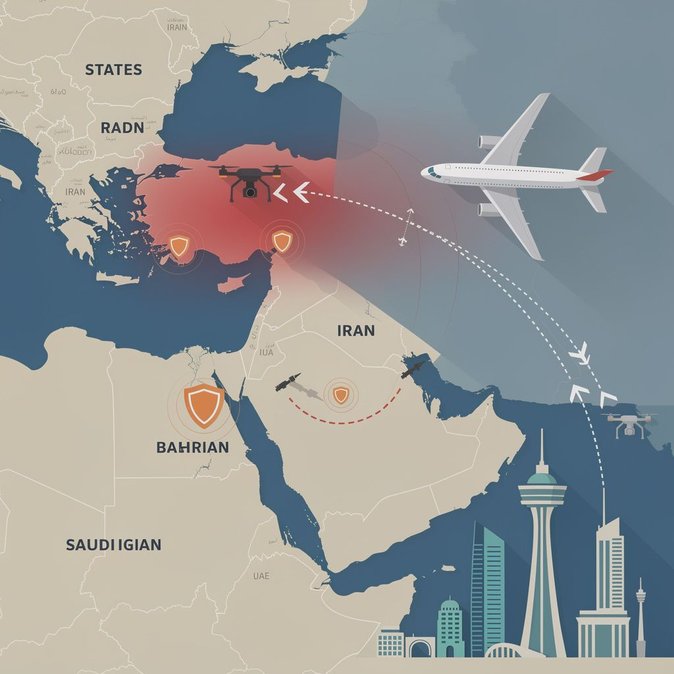
Escalating rhetoric between Washington and Tehran spilled into practical travel considerations on 16 November as Gulf News outlined what UAE residents need to know. A third US aircraft-carrier strike group has entered the region, Iran has threatened retaliation and Bahrain has intercepted drones allegedly launched by Iran’s Revolutionary Guard Corps. Saudi defences also reported downing ballistic missiles near Riyadh. Although no strikes have hit the UAE, the General Civil Aviation Authority (GCAA) continues to bar Iranian carriers pending further notice, and UAE airlines have extended suspensions or capacity cuts on Saudi routes. The US Embassy in Bahrain and several Western governments updated travel advisories, warning of potential airspace closures and urging heightened vigilance at airports and seaports. From a mobility perspective, corporate security teams should raise threat levels for assignees travelling through the Strait of Hormuz, monitor maritime advisories from UKMTO and check insurance coverage for war-risk zones. Air passengers on US-bound connections from Dubai must still complete additional health attestations related to earlier DRC travel bans, complicating check-in procedures. Businesses rotating crews or executives through Bahrain, Saudi Arabia and Kuwait are advised to maintain dual routing plans, including overland options, in case sudden no-fly notices emerge. Logistics departments should be prepared for short-notice delays in express freight moving via DXB and AUH. The geopolitical backdrop also heightens the importance of transparent employee communication: multinational HR teams should circulate clear briefing notes, including embassy hotlines, safe-room locations and procedures for shelter-in-place orders should regional attacks escalate.
Source: Gulf News