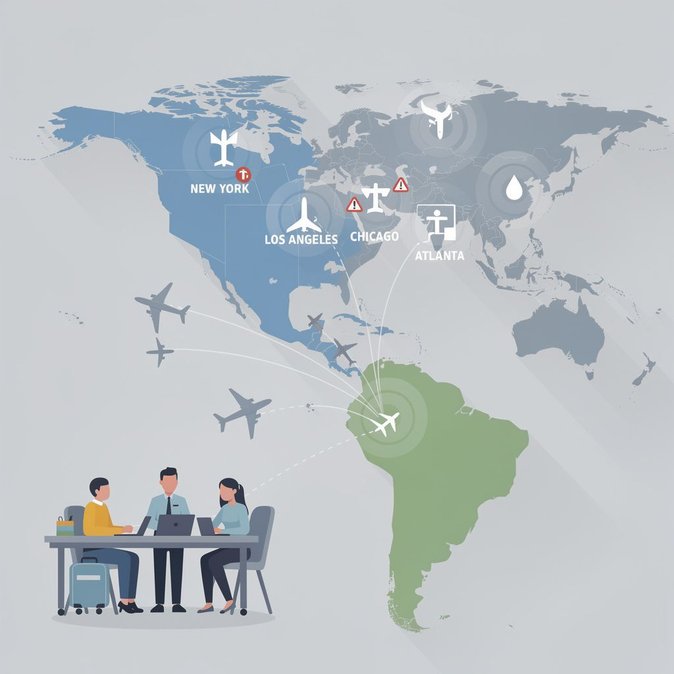
Four days after a nationwide Federal Aviation Administration systems failure paralysed U.S. air traffic, ripple effects still plague major hubs, according to the 17 November travel-risk bulletin issued by São Paulo-based A1 Inteligência de Viagens. More than 18,000 flights were cancelled over the weekend, and a further 2,500 on Saturday alone, with lingering backlog at JFK, LAX, Chicago O’Hare, Atlanta and Miami—gateways heavily used by Brazilian corporate travellers. United Airlines has resolved its own IT malfunction, but slot availability remains tight, forcing rolling delays and missed connections. A1 rates the United States “High Risk” for aviation disruptions through at least 18 November and recommends Brazilians arrive three hours early, monitor apps and build buffer days into multi-city itineraries. Brazilian airports are operating normally; however, LATAM and Azul have waived rebooking fees for passengers transiting the affected U.S. hubs through 20 November. Freight forwarders report hold-ups in time-sensitive pharma shipments routed via Miami. Mobility managers with assignees returning from Thanksgiving family visits should activate traveller-tracking protocols and clarify expense reimbursement for overnight accommodation abroad. The outage underscores the vulnerability of global mobility programmes to single-point aviation failures. Firms are urged to diversify routings—using Bogotá or Panamá as contingencies—and to ensure Duty of Care platforms ingest real-time NOTAM feeds from the FAA.
Source: A1 Inteligência de Viagens