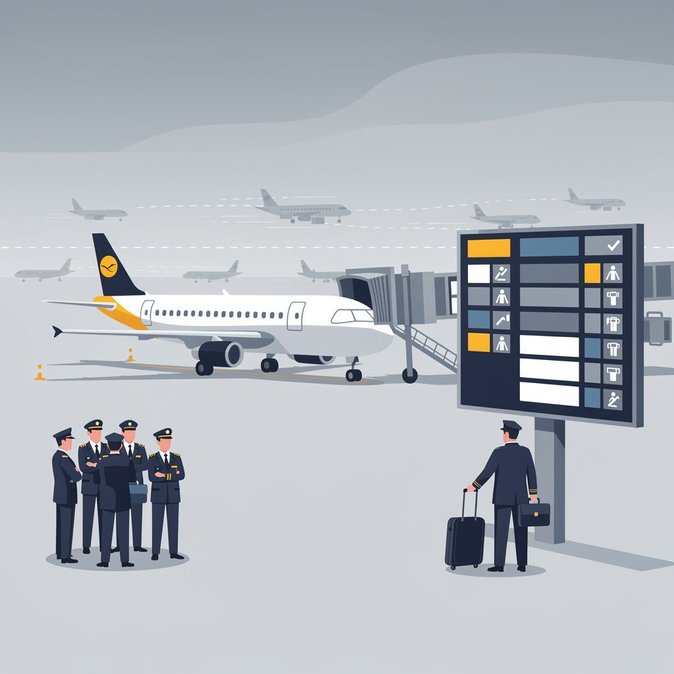
Just as the year-end travel season looms, the wage dispute between Lufthansa and its cockpit crews is back on a knife-edge. The pilots’ union Vereinigung Cockpit (VC) announced on 17 November that seven months of talks and a mediated conciliation have broken down. VC has given Germany’s flag-carrier until Monday, 23 November, to accept the mediators’ compromise plan; otherwise, industrial action is “on the table without limitation”. Any walk-out would hit Frankfurt Airport—the hub for most intercontinental business traffic to and from Germany—particularly hard. During previous strike waves in April, Lufthansa cancelled more than 1,200 flights in two days, stranding an estimated 180,000 passengers. This time, the carrier warns that up to 1,000 cockpit jobs could be at stake if labour costs are not contained, while the union argues it has already offered wage freezes and productivity concessions. For mobility managers the timing could not be worse. Multinationals are ramping up travel budgets for client visits and global strategy meetings postponed during the autumn Middle-East crisis. Travel teams should activate contingency plans: pre-approve alternative routings via Amsterdam, Zurich or Paris; remind travellers that German rail tickets are valid on certain routes if flights are cancelled; and ensure duty-of-care tracking systems capture last-minute itinerary changes. Companies operating assignment cycles in December should also review their shipping schedules: cargo belly-hold capacity would tighten if a strike grounds wide-body aircraft. On the policy front, repeated strike threats may accelerate German debate over minimum services in critical transport sectors. The transport ministry has floated a “mobility security law” patterned on Italian regulations that guarantee a skeleton flight schedule during labour disputes. Stakeholders should expect draft language before the Easter recess in 2027.
Source: Tagesschau