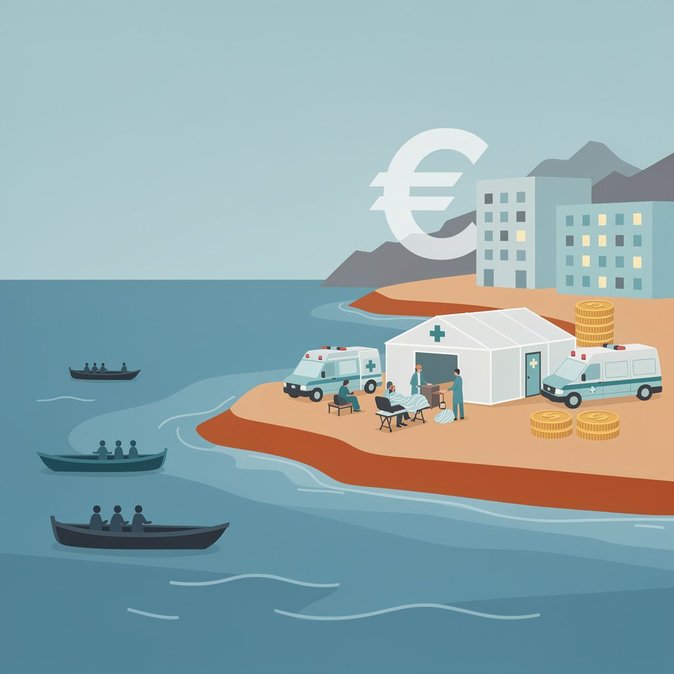
Spanish broadcaster Antena 3 reports that 11,037 people arrived irregularly by sea in the Canary Islands between 1 and 15 November—almost as many as in the entire month of October. On 15-16 November alone, Salvamento Marítimo rescued 246 people in two wooden cayucos near El Hierro; the temporary reception centre (CATE) on the island is now running at over twice its designed capacity with 1,200 occupants. The surge follows a record weekend in which more than 3,100 people reached the archipelago in 72 hours. Authorities attribute the spike to calmer seas and to traffickers in Senegal and The Gambia switching routes after reinforced patrols along Morocco’s Atlantic coast. Eight minors and several injured adults were among the latest arrivals, underscoring the humanitarian dimension of the crisis. Canary Islands officials have reopened mothballed facilities in Tenerife and La Laguna and are transferring hundreds of people daily to mainland Spain to relieve pressure. Nevertheless, the regional government warns that shelters for unaccompanied minors are already full and hospital emergency rooms are close to saturation. For employers operating projects in the Canaries—particularly tourism, construction and renewable-energy firms—the influx could affect local hiring markets, housing availability and medical services. It also raises the prospect of ad-hoc border checks at island airports if Madrid follows Italy and France in tightening Schengen controls. Corporate travel managers should maintain flexible itineraries and factor in additional ID screening time at Canary Island ports and airports. Coordination with vetted ground handlers is advised to avoid overlap with migrant transfer flights.
Source: Antena 3 Noticias