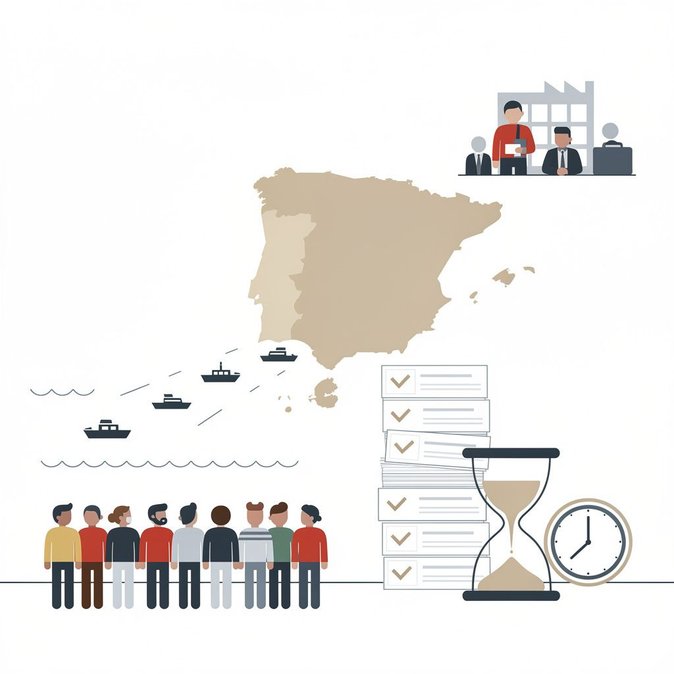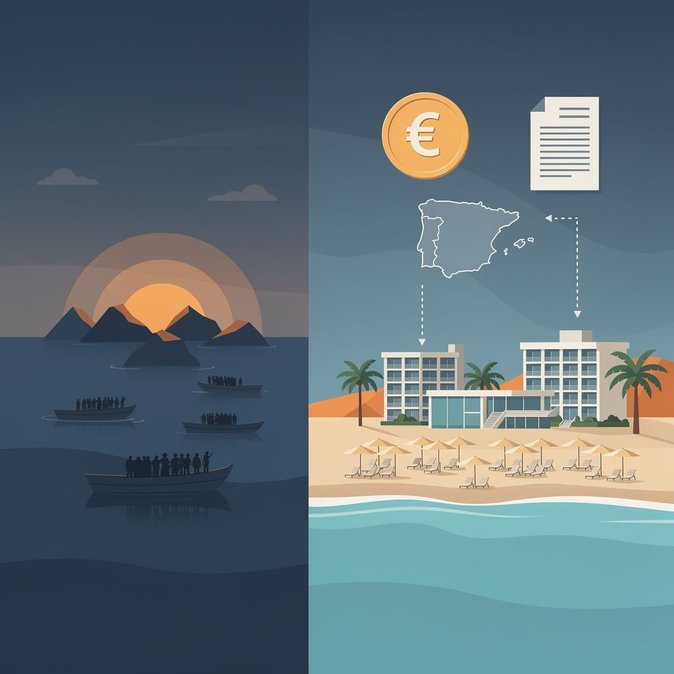
Canary Islands president Fernando Clavijo has written an urgent letter to Spanish Prime Minister Pedro Sánchez asking Madrid to request the activation of the European Commission’s crisis-response mechanism after 11,657 migrants reached the archipelago between 1 and 16 November—an 817 percent increase on the same period last year. Clavijo will travel to Madrid today ahead of Tuesday’s meeting of the Inter-ministerial Migration Commission, where he says he expects “clear commitments and a calendar” for additional financial and logistical support. Under EU rules, Spain can seek rapid-reaction funds, transport assets and relocation pledges when an outer-border region faces disproportionate migratory pressure. Although Brussels contributed €50 million to Canary Islands reception infrastructure in August, Clavijo argues that the pace of arrivals has rendered those resources “obsolete in a matter of weeks”. The regional government has already diverted €12 million from tourism-promotion budgets to rent cruise ships for temporary accommodation and is recruiting 300 extra social workers on three-month contracts. Business groups including the Confederación Canaria de Empresarios warn that the re-allocation of hotel capacity and ferry berths is dampening early-winter tourism demand, traditionally worth €1.5 billion to the islands. Clavijo is also calling for systematic transfers of asylum seekers to mainland Spain to ease the archipelago’s burden. Interior officials insist transfers are happening—5,800 people have been flown to Málaga, Valencia and Bilbao since September—but rights groups say the pace is far too slow. If no EU mechanism is triggered, the islands may invoke a newly created Spanish “territorial solidarity” clause that would oblige each autonomous community to take a quota of arrivals. For global-mobility managers, the episode underscores how quickly a regional migration spike can ripple into supply-chain delays, staff-travel complications and reputational concerns for companies operating tourist infrastructure. Firms with projects in the Canaries should review contingency plans and monitor the outcome of Tuesday’s commission meeting.
Source: Atlántico Hoy