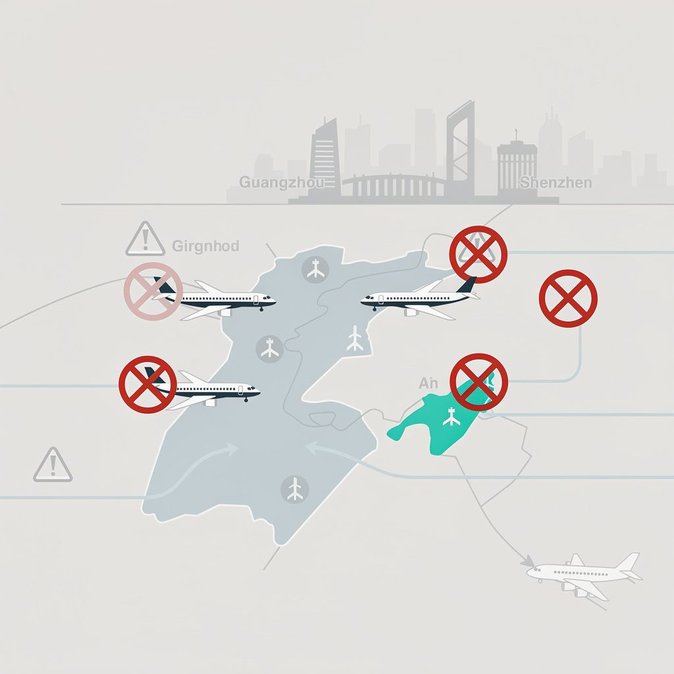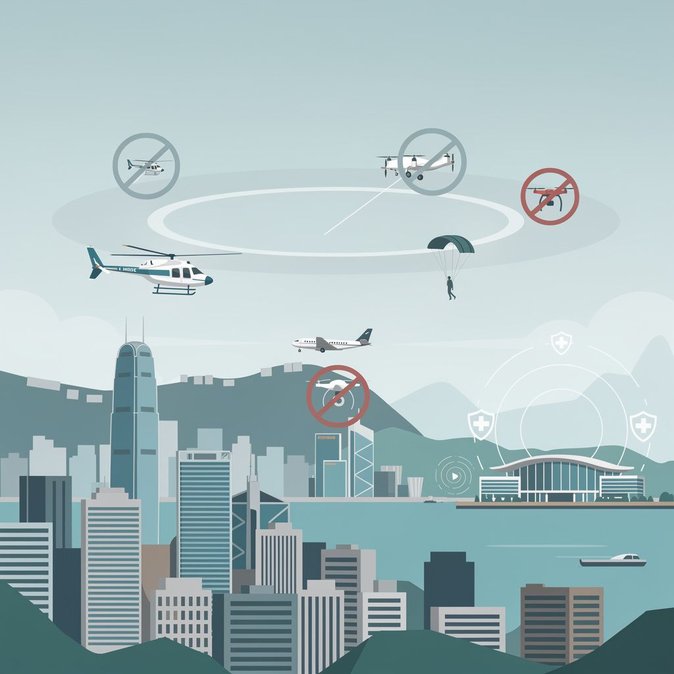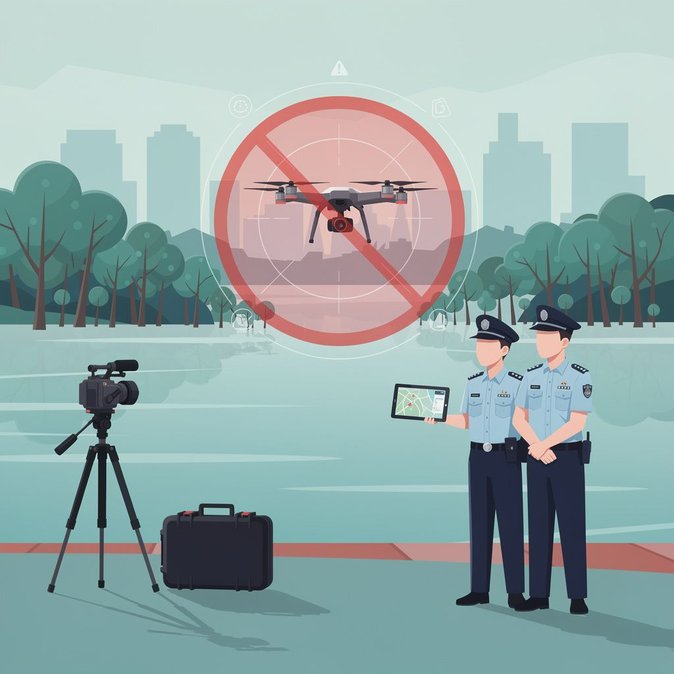
Hong Kong police made their first arrest under the city’s temporary flight-restriction order on the evening of 17 November, detaining a 40-year-old expatriate photographer in Nam Sang Wai for allegedly operating a small drone inside the newly declared no-fly zone that blankets the northern New Territories. Officers from the Regional Mobile Division spotted the quad-copter during a routine patrol and seized the device as evidence. The arrest came less than 22 hours after the four-day restrictions on drones, kites and paragliders took effect. Under the Small Unmanned Aircraft Order, flying in a prohibited area without written permission carries a maximum penalty of two years’ imprisonment and a HK $100,000 fine. Police used the incident to underline that ignorance of the boundaries – which are published on the CAD’s online map and the “DroneHK” mobile app – is no defence. For companies, the case is an immediate compliance lesson. Facilities managers who routinely use drones for roof inspections, construction progress photography or security patrols must suspend operations until at least 21 November or apply for an emergency exemption that proves critical need and mitigations. Insurance policies for commercial drone operators typically exclude illegal flights, so any accidental breach could void cover and create liability. Travel-risk consultants recommend that visiting executives brief personal assistants and marketing staff – who sometimes pack hobby drones for leisure footage – about the absolute prohibition. Firms should also update internal policy documents and ensure ground-handling agents warn incoming private-jet passengers at Hong Kong International Airport. The arrested individual’s device will undergo forensic analysis, and prosecutors are expected to treat the case as a deterrent benchmark. Long-term, aviation lawyers predict tighter integration between Hong Kong and mainland drone rules, especially after Shenzhen’s city-wide ban proved workable during APEC. A joint notification platform and shared enforcement database are already under discussion, which could lead to unified Greater Bay Area drone permits by 2028.
Source: China Labour Bulletin Board