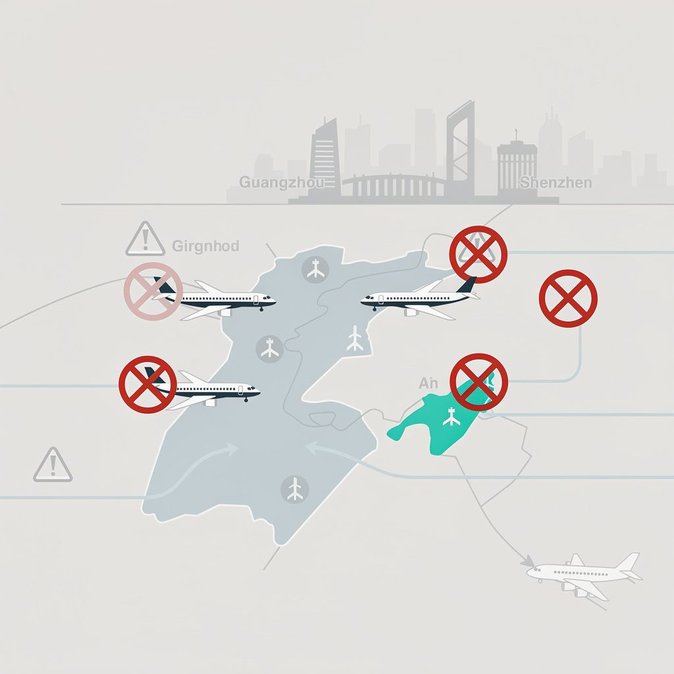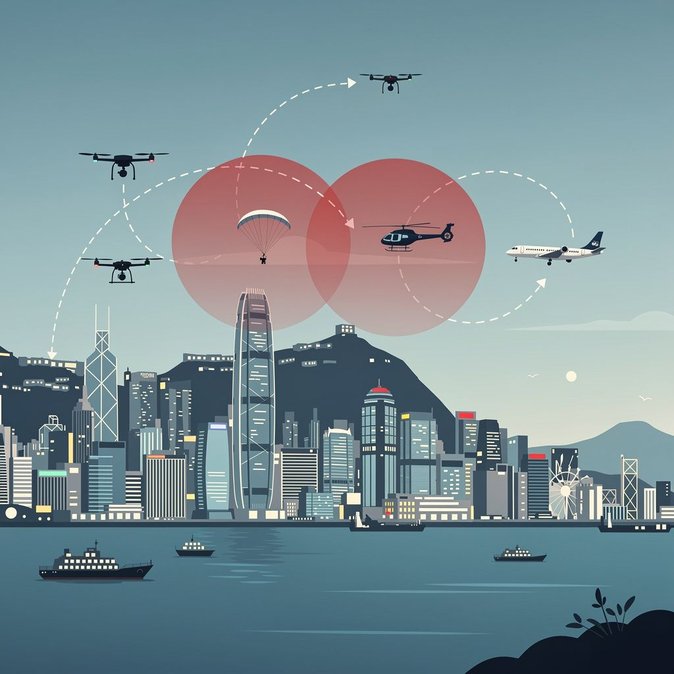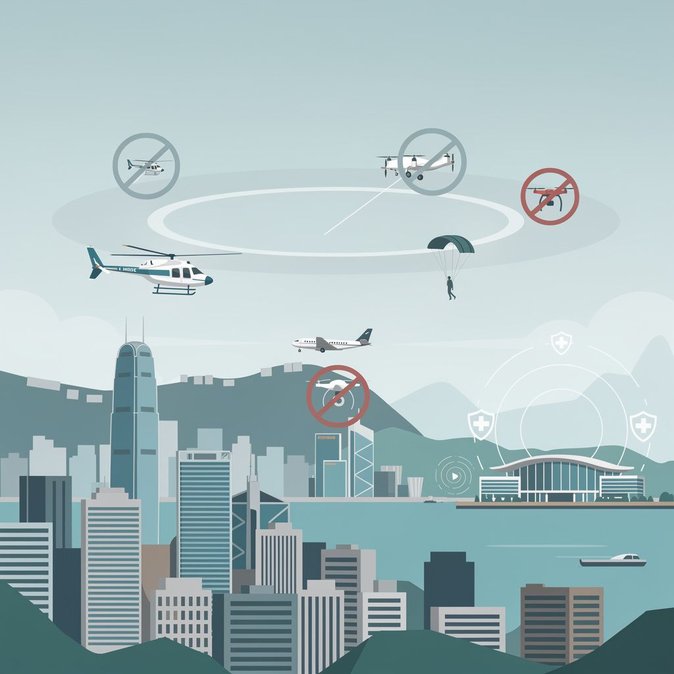
Hong Kong’s skies entered an unprecedented hush at 00:01 on 17 November as a territory-wide Aeronautical Information Publication (AIP) supplement and police order came into force for the first time outside a typhoon. The measures – introduced to support the Asia-Pacific Economic Cooperation (APEC) Leaders’ Week taking place just across the border in Shenzhen on 18-19 November – prohibit all civilian helicopters, light aircraft, paragliders, kites and mass balloon releases. A parallel restricted-flying zone in the northern New Territories also outlaws recreational drone use unless special permission is granted by the Civil Aviation Department (CAD). Government Flying Service operations, scheduled airline traffic at Hong Kong International Airport and emergency services remain exempt. Background discussions between the CAD, Hong Kong Police Force (HKPF) and Shenzhen authorities began in early October after mainland regulators created a 200-kilometre aviation security ring around the summit venue. Hong Kong’s officials ultimately opted for a blanket ban between 17 and 20 November rather than multiple rolling NOTAMs, arguing that absolute clarity would be easier for the public and operators. The closure immediately halted popular Victoria Harbour sightseeing flights, Macau charter shuttles and flight-training sorties from Shek Kong; affected companies have offered free re-booking or refunds. Corporate travel managers should note that the restrictions apply to foreign-registered business aircraft transiting Hong Kong airspace at low level, and that any point-to-point helicopter itinerary – including cross-boundary hops to Guangdong heliports – must be rescheduled after 21 November. Travellers planning aerial photography, drone surveys or leisure drone flights face fines of up to HK $100,000 and two years’ imprisonment. Freight operations and scheduled passenger jets are unaffected but may experience minor vectoring as air-traffic controllers separate exempt government or medevac flights. Security planners hinted that the episode is a trial run for future major-event air-control models. With Hong Kong committed to hosting the National Games sailing regatta in 2027 and bidding for Expo 2030 auxiliary events, officials are studying whether short, territory-wide “silent skies” windows could become standard for VIP protection. Industry groups are expected to lobby for more granular corridors next time, citing significant revenue losses for local helicopter operators and aerial-work firms. In practical terms, expatriate residents and inbound business travellers should avoid bringing drones into Hong Kong until the ban lifts at 23:59 on 20 November. Those already in possession should store devices indoors, while corporate security teams should update travel-risk advisories and ensure that any aerial-inspection contractors hold written CAD exemptions before operating.
Source: Fanzei.net