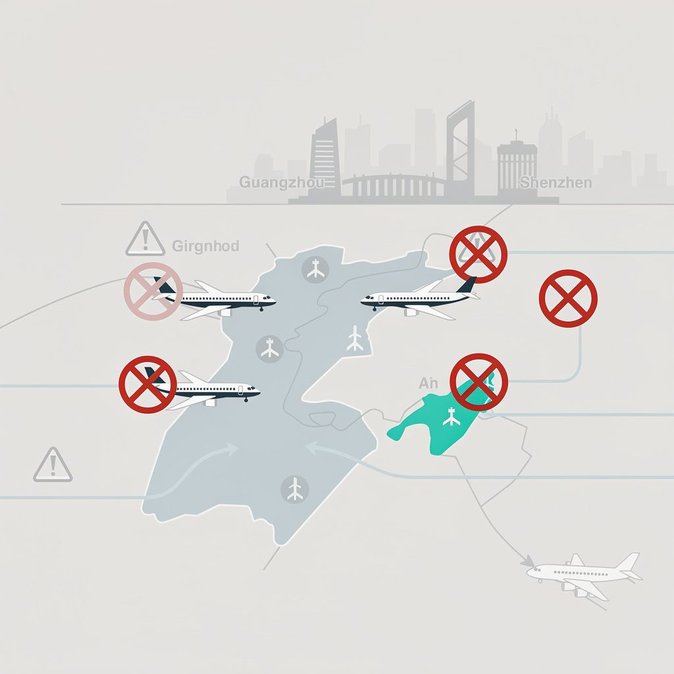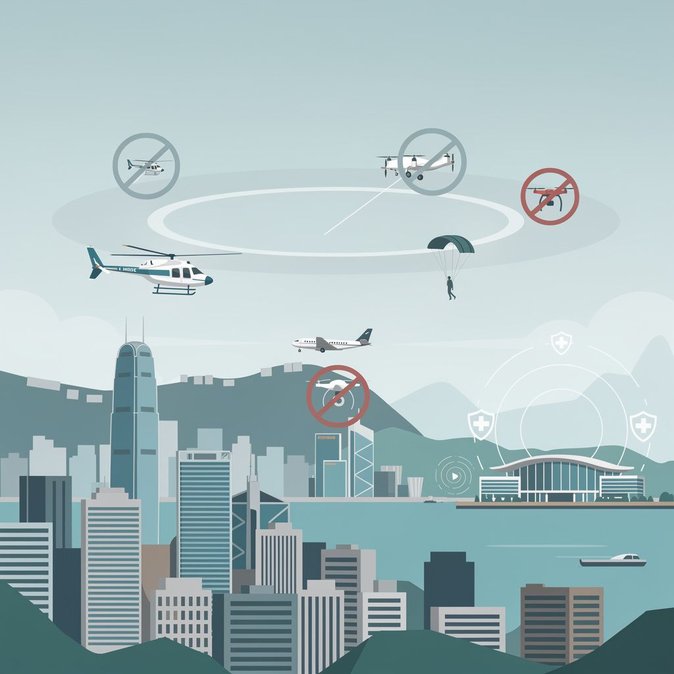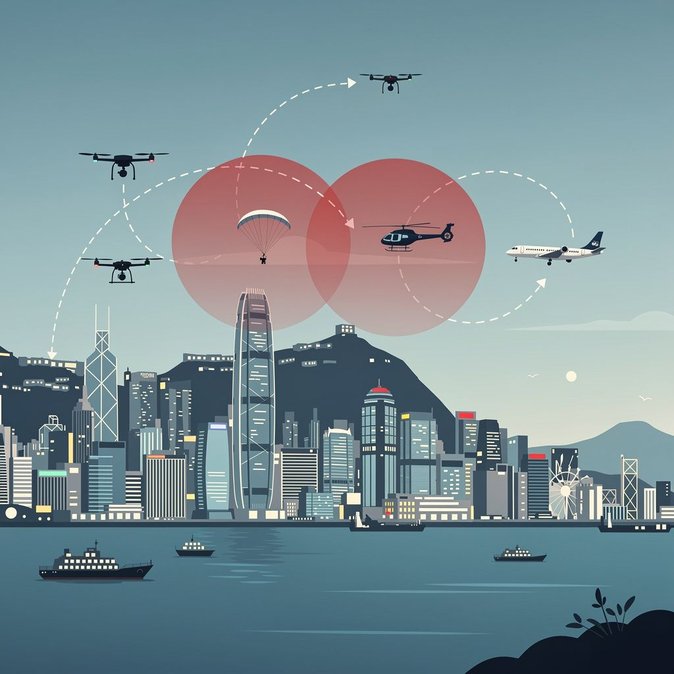
Beginning 00:01 on 17 November and running through 23:59 on 20 November, Hong Kong’s Civil Aviation Department (CAD) and the Hong Kong Police Force have activated two overlapping Temporary Restricted Flying Zones to protect the Asia-Pacific Economic Cooperation (APEC) Economic Leaders’ Meeting taking place across the border in Shenzhen. Under Zone A, which covers large parts of the New Territories north of Tai Mo Shan, recreational flying is essentially suspended. Drones, paragliders, kites, captive balloons and other low-altitude devices are banned unless the operator holds a special permit jointly issued by CAD and the police. The authorities have warned that failure to comply is a criminal offence punishable by both fines and imprisonment. Zone B goes even further, stretching across the whole of Hong Kong SAR. All private helicopters and light aircraft—including corporate and air-taxi movements—are grounded. Only the Government Flying Service may operate, primarily for emergency and law-enforcement duties. Airlines and business-jet operators were formally notified last week via an Aeronautical Information Publication (AIP) Supplement and a Notice to Airmen (NOTAM). Recreational pilots have been told to consult CAD’s ‘eSUA’ portal before flight planning. The blanket ban has immediate operational implications for corporate travel managers and aviation crews. Hong Kong’s major heliports at Harcourt Road and the Macau Ferry Terminal are effectively closed to commercial charter, while cross-border sightseeing flights from Shek Kong and Macau have been cancelled. Multinationals that routinely position helicopters between Shenzhen and Central are being advised to route key personnel through scheduled commercial flights or ground transport. Insurance providers are also reminding drone-services firms that flying within the restricted area could invalidate policies. Although disruptive, the move is in line with tightened security measures that Mainland authorities introduced earlier in November, including a city-wide drone ban in Shenzhen and vehicle restrictions in six core districts. For Hong Kong businesses, the episode underscores a growing trend: major regional events on the Mainland increasingly trigger airspace constraints that spill over into the SAR, and contingency planning for mobility programs is now essential.
Source: Fanzei.net