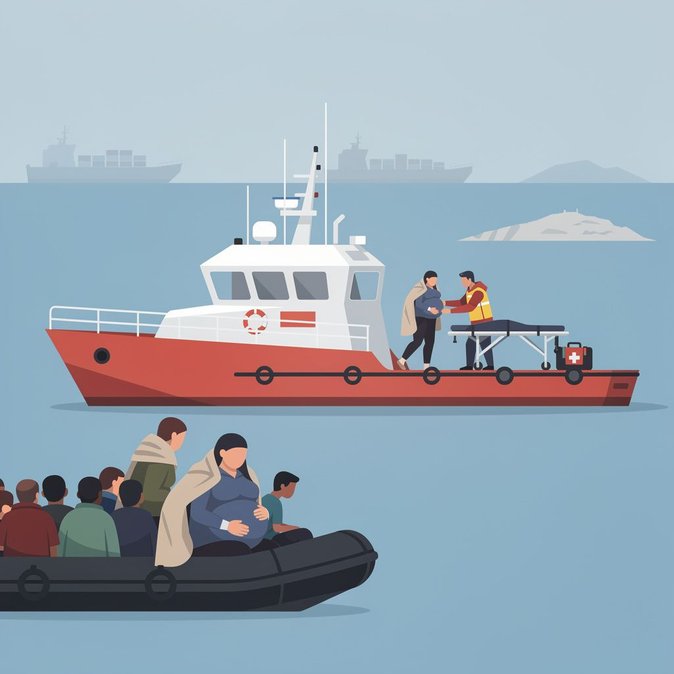
Two back-to-back rescues in the Sicilian Channel on 16 November brought 52 migrants safely to Lampedusa. The first operation involved a six-metre wooden boat that had sailed from Abu Kammash, Libya. On board were eleven people, including a woman in labour and three children. She and a man suffering a severe head wound were rushed to the island’s polyclinic. Shortly beforehand, a Frontex patrol vessel had intercepted a second craft with 41 people of Iranian, Iraqi and Yemeni origin. All survivors were taken to the hotspot, now hosting 284 people. Medical evacuations of expectant mothers are rare but underline ongoing gaps in pre-departure health screening. Italian coast-guard officials say the case strengthens the argument for an EU-funded medical triage facility in Tunisia, a project still awaiting budget approval. The incident also spotlights Frontex’s expanded role: its Maritime Analysis and Operations Centre in Rome now coordinates real-time data with Libya via a pilot information-sharing platform. Commercial shipping lines transiting the area were advised of temporary exclusion zones during the rescue, a factor logistics planners must log into voyage schedules. At corporate level, companies with staff on Lampedusa for wind-farm construction report no disruption but note that the island’s sole hospital was briefly saturated. Duty-of-care managers should keep emergency-medical-evacuation contracts current given the hotspot’s fluctuating occupancy. On the policy side, humanitarian NGOs are pressing Rome to accelerate transfers to mainland facilities to avoid overcrowding during expected fair-weather windows in December.
Source: Italy Flash