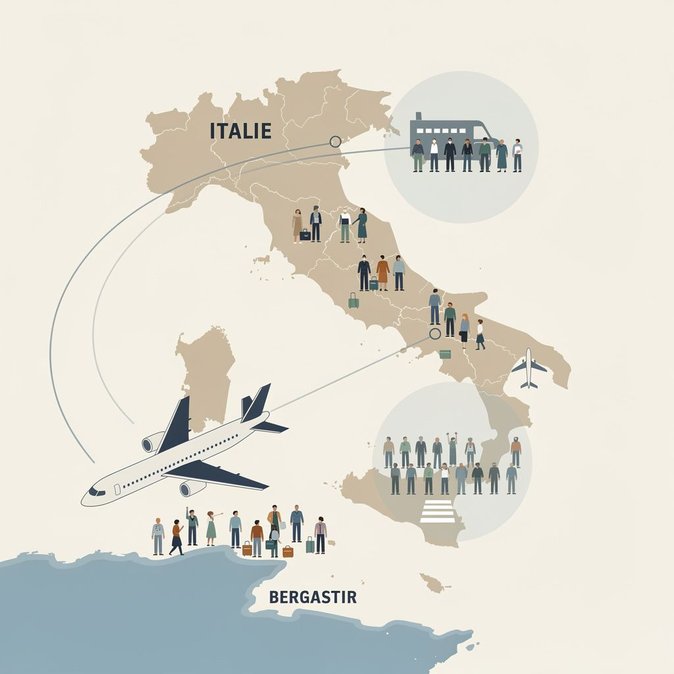
In the early hours of 16 November four buses escorted by riot police transferred around 150 migrants—including families with children—from the Monastir reception centre near Cagliari to Elmas airport. A chartered Boeing 737 then flew the group to Bergamo’s Orio al Serio airport in northern Italy. Authorities said the move was needed to relieve chronic overcrowding at the centre, which holds well above its authorised capacity. Similar redistributions have become routine since the Interior Ministry updated its placement algorithm in July 2026 to spread asylum seekers more evenly across regions and free up emergency beds in the south. Lombardy, which has lower occupancy rates, received the largest share in this week’s rotation. The operation illustrates the logistical complexity of Italy’s internal mobility system: border-police checkpoints were set up at the civilian terminal, and other passengers were temporarily rerouted. For airlines and airport handlers, last-minute charter slots create scheduling challenges but also revenue opportunities. NGOs welcomed the transfer for reducing pressure on Monastir but urged authorities to increase legal-aid staffing in destination provinces so applicants can file claims within the 30-day window. The local trade association Confindustria Bergamo said companies in manufacturing and logistics are already interviewing some transferees eligible for work under the new “integration through employment” pilot. For global-mobility teams the key takeaway is that secondary movements within Italy may alter where international staff interact with asylum-related services. Companies operating in Sardinia or Lombardy should check whether security procedures or traffic restrictions affect employee commutes or air-cargo timelines.
Source: L’Unione Sarda