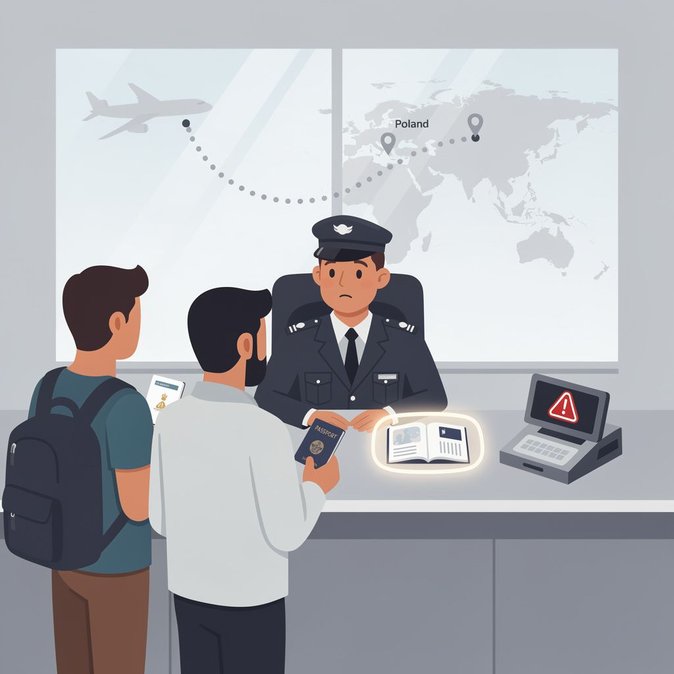
Polish border officers at Kraków–Balice airport have charged two Middle-Eastern nationals after uncovering a sophisticated passport forgery during exit controls. In a statement released on 16 November, the Karpacki Border-Guard Division said a 46-year-old Iraqi passenger presented an authentic Swiss Schengen visa but was also carrying a counterfeit United Kingdom passport in another identity, which he intended to use to board a flight to Britain. A 48-year-old Kuwaiti accompanying him is alleged to have arranged the fraudulent papers. Agents became suspicious when biometric chips in the Swiss visa and the British document did not match the man’s fingerprints. Forensic examination found that the counterfeit used genuine security paper obtained from a stolen blank, suggesting involvement of an organised forgery network. Both men face criminal charges of attempting to cross a state border using deceit (Article 264 of the Polish Penal Code) and of possessing false travel documents; convictions can bring up to eight years’ imprisonment. Administrative return orders with multi-year Schengen re-entry bans were also issued. The incident highlights Kraków’s growing role as a transit hub for travellers from the Middle East seeking to reach the UK via Poland’s relatively low-profile secondary airports. Since January the airport has recorded 27 forged-document cases—already double the 2025 total—prompting the Border Guard to deploy additional document experts and ultraviolet scanners at departure gates. For employers the case illustrates the importance of verifying the authenticity of employee passports and visas when arranging business trips, especially for short-term contractors recruited through agencies. Mobility teams should remind travellers that Polish exit checks are now routine and that carrying or even merely holding falsified documents can permanently bar entry to the entire Schengen zone. Airlines, meanwhile, face fines of up to €15,000 per inadmissible passenger if carriers fail to detect forged papers at check-in. The Border Guard has asked UK and Gulf authorities for assistance in tracing the source of the blank passport and warned that further arrests are likely.
Source: Onet.pl / Głos24