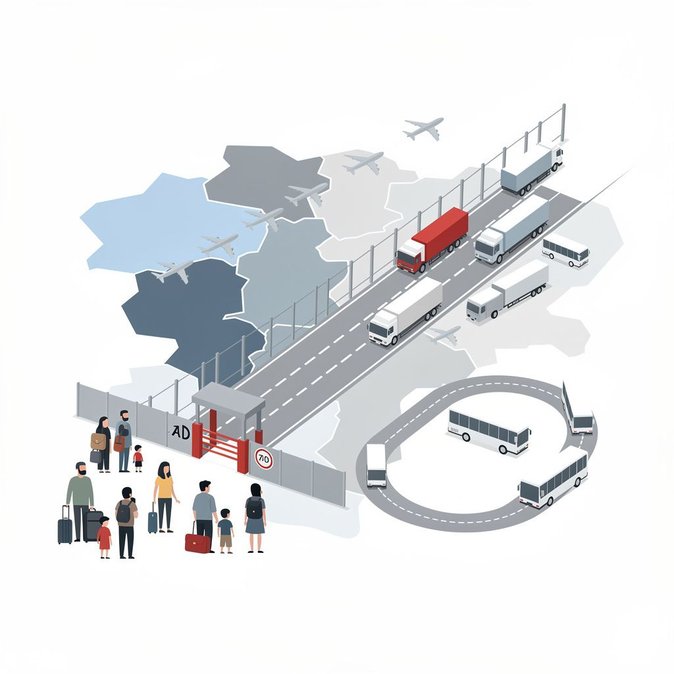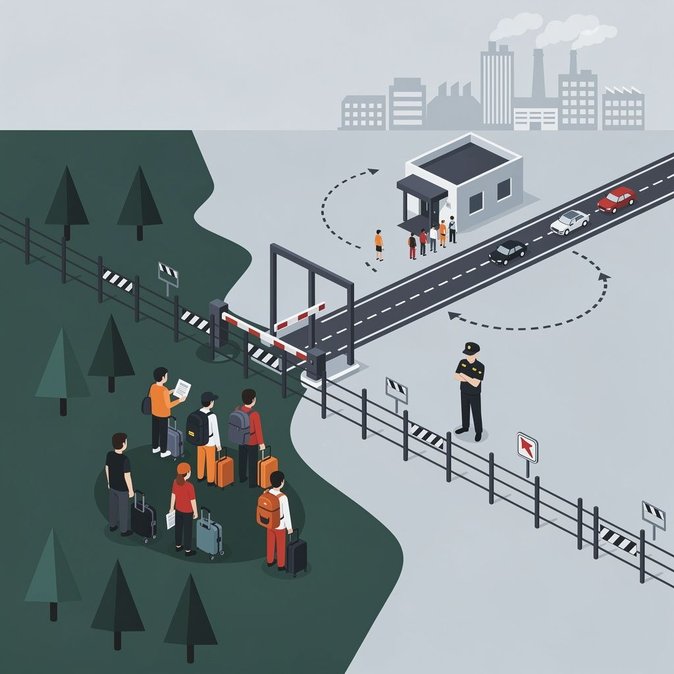
Poland’s Council of Ministers has issued a fresh regulation that prolongs the extraordinary ban on lodging applications for international protection at the land border with Belarus. Published in the Journal of Laws on 16 November 2026, the decree takes effect on 17 November and keeps the restriction in place for another 60 days. Warsaw first introduced the measure in March 2025 as a response to an orchestrated build-up of irregular migrants ferried to the frontier by Minsk. Since then, it has been renewed ten times, underscoring how the standoff has become a semi-permanent feature of Poland’s border policy. Under the order, Border Guard officers may refuse to accept asylum claims at road and rail crossings as well as in the forested “green border” strip. Would-be applicants can still seek protection at Polish diplomatic posts abroad or at internal offices once they have lawfully entered the country, but access from Belarus is effectively sealed. The government argues that the measure is necessary to prevent hybrid pressure from the Lukashenko regime and to preserve public order amid Russia’s ongoing war against Ukraine. Human-rights NGOs have criticised the policy, saying it violates the EU’s asylum acquis and the non-refoulement principle. Businesses in the logistics and hospitality sectors, however, largely back the move, stressing that predictable border controls are preferable to sudden surges of irregular crossings that disrupt freight flows and strain local accommodation capacity. For mobility managers the message is clear: workers or assignees currently in Belarus cannot file for refugee status at the Polish frontier and must use consular channels instead. Employers should also expect spot checks on company buses and trucks; carriers found transporting persons without valid visas face fines of up to PLN 15,000 per passenger. The extension overlaps with Poland’s temporary re-introduction of Schengen controls on its German and Lithuanian borders, meaning travellers may encounter layered checks when transiting the country. Multinationals should factor in longer lead times for cross-border transfers and keep contingency plans for rerouting freight through alternative EU entry points.