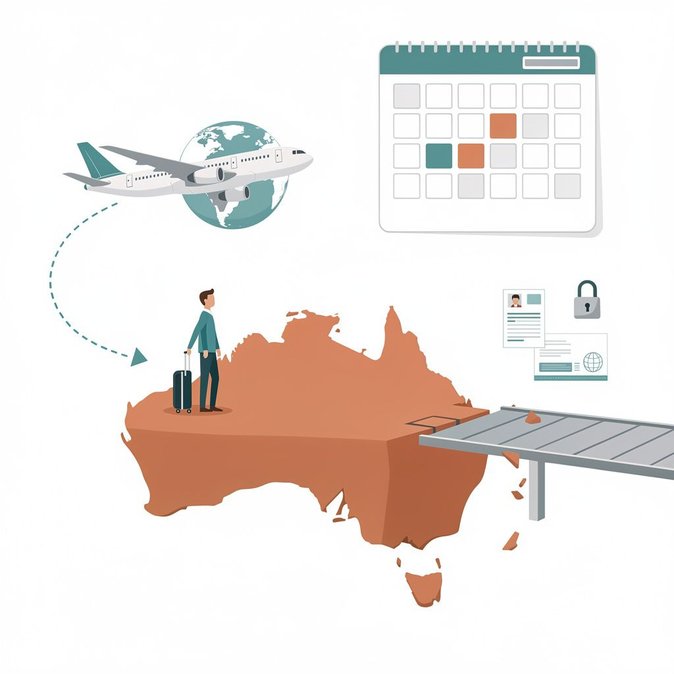
Training materials circulated to migration agents and summarised by World Visa Academy on 18 November indicate that, from 30 November 2026, the Department of Home Affairs will grant far shorter travel windows on Bridging Visa B (BVB) applications lodged by individuals awaiting decisions on Subclass 482 Temporary Skill Shortage, Subclass 186 Employer Nomination Scheme and Subclass 494 Skilled Employer Sponsored Regional visas. Instead of the six-month (or longer) exit-and-return periods frequently issued in recent years, new BV B grants will be aligned to the specific trip dates provided in the application and must be supported by documentary evidence such as flight bookings, medical letters or employer confirmations. The underlying legislation is unchanged: applicants must still demonstrate a genuine need to travel and an intention to return. What shifts is Home Affairs’ operational practice, bringing it closer to the strict interpretation in policy manuals. Any BVB lodged before 30 November will be assessed under the current, more generous approach. For employers the change increases the administrative burden and risk of assignment delay. Staff who hold only a Bridging Visa A while their substantive visa is pending will need to plan overseas travel further in advance, gather proof and potentially accept a BVB valid for only the stated trip. Missed flights or extended business meetings could leave an employee unable to re-enter Australia without a new grant. Global mobility teams should immediately audit upcoming travel for 482/186/494 applicants, lodge BVB requests well before the 30 November cut-off where longer travel windows are desirable, and update travel policies to include contingency plans such as remote work arrangements if return is delayed. HR systems should also record BVB expiry dates and conditions alongside substantive-visa details to avoid inadvertent overstays. While the tighter practice may help Home Affairs monitor compliance and minimise long absences, it places greater onus on employers and travellers to keep itineraries precise and documentation watertight.
Source: World Visa Academy