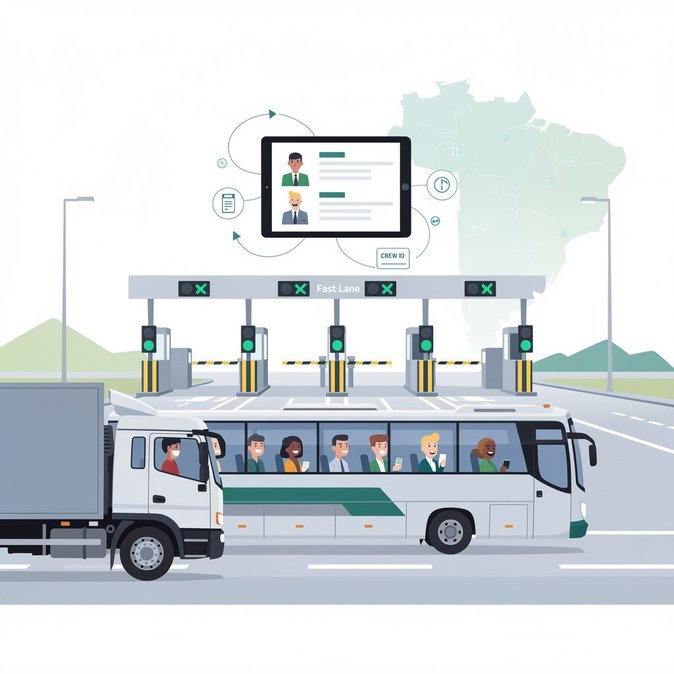
With the publication of Decree 13.171 in the 17 November edition of the Diário Oficial da União, Brazil formally incorporated the Seventh Additional Protocol to the Partial Scope Agreement on International Land Transport (ATIT) into domestic law. The measure updates Annex II of ATIT, modernising migration procedures for drivers, mechanics and other crew members operating trucks and buses across South America. Signatories include Argentina, Bolivia, Chile, Paraguay, Peru and Uruguay, creating a harmonised framework for multiple-entry authorisations, digital manifests and recognised crew IDs valid in all seven jurisdictions. Under the new rules, transport companies will be able to file crew lists electronically before departure and crew members will benefit from a simplified border-crossing lane that removes the need for individual passport stamps on each trip. Brazilian customs expects the change to shave up to 30 minutes off the average crossing time at busy commercial borders such as Paso de los Libres–Uruguaiana and Foz do Iguaçu–Ciudad del Este. The protocol also introduces a 90-day grace period for carriers to adapt their IT systems, with Receita Federal promising an API that feeds directly into its Siscomex cargo platform. For exporters the impact is significant: predictable transit times reduce demurrage costs and allow just-in-time deliveries to Paraguayan and Argentine plants. Logistics managers should, however, update driver handbooks—crew must carry the new Mercosur Crew Card alongside their national ID until all border posts complete the software upgrade. HR teams should also verify that subcontracted carriers register their employees in Brazil’s eSocial payroll system, as the decree tightens labour-compliance cooperation between migration and labour authorities. Observers note that the protocol is the first multilateral mobility instrument ratified since Mercosur’s consolidation package of 2023. Analysts see it as a building block for the long-discussed Mercosur Single Transit Document, which could eventually merge customs, sanitary and migration controls into one form. For now, companies trading on wheels will gain the most tangible benefit: less time idling at the border and fewer stamps in a very full passport.
Source: Diário Oficial da União