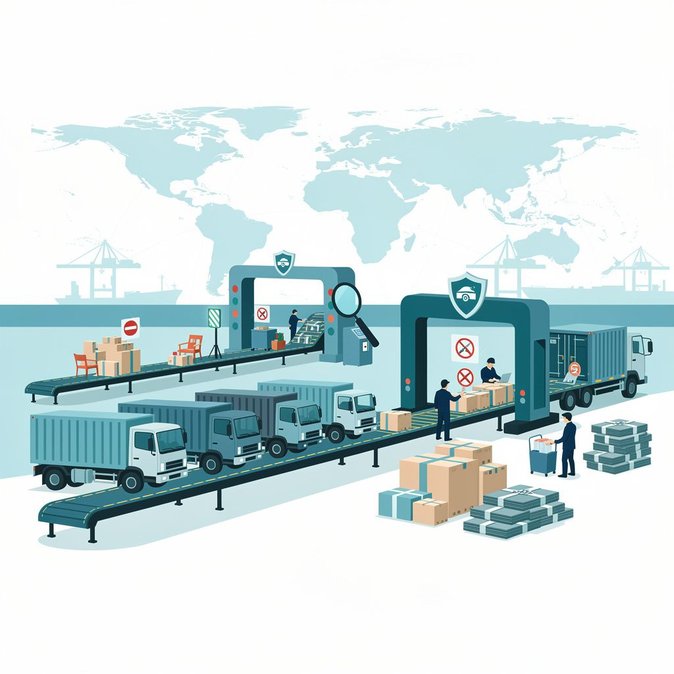
The Revenue Service (Receita Federal) released the final results of Operação Fronteira 2026 at a press briefing in Brasília on 16 November, with detailed figures published on 17 November. The ten-day joint operation—conducted from 3 to 13 November across 12 states—mobilised 3,800 agents from the Receita, Federal Police, Armed Forces and state security forces. In total, officials confiscated R$ 324 million in contraband merchandise—including electronics, designer apparel and counterfeit auto parts—and R$ 257 million worth of cocaine and other narcotics. Forty-three people were arrested, 112 vehicles seized and eight clandestine river crossings shut down. The Porto de Santos alone accounted for four simultaneous busts ranging from e-cigarettes to high-grade cocaine disguised in soybean meal. The campaign is the largest border-enforcement surge since the programme’s inception in 2021 and reflects Brasília’s strategy of concentrating resources in short, high-impact windows. For logistics and relocation managers the immediate implication is tighter inspections at land borders and seaports through year-end as residual teams process evidence and pursue leads. Importers should expect longer clearance times on high-risk commodity codes, while companies routing household goods for expatriate moves may face random inspections. Trade-compliance teams are advised to verify customs brokers’ AEO status and budget for potential demurrage. The government framed the operation as a precursor to a new Integrated Border Management Plan due in early 2027, which will introduce risk-scoring algorithms and expanded use of non-intrusive inspection technology. Multinationals should prepare for a more data-intensive customs environment and ensure product master data is accurate to avoid red flags.