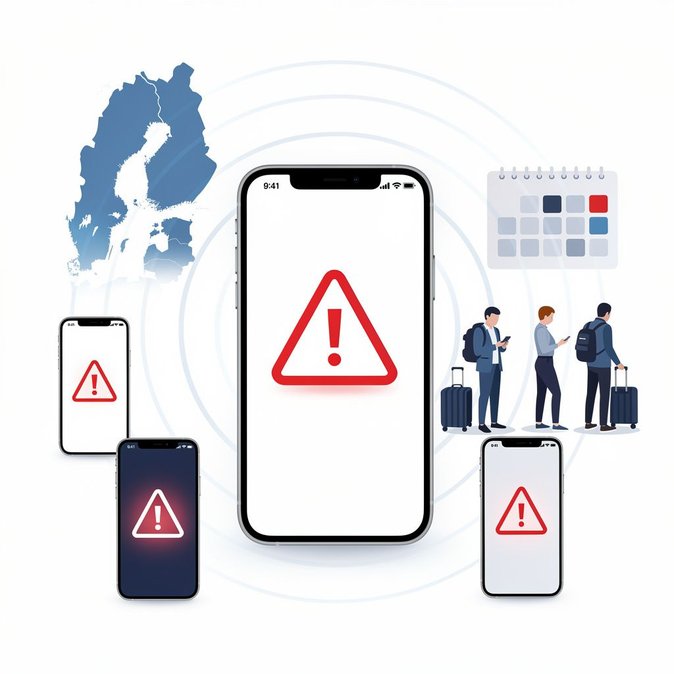
Finnish authorities conducted the first nationwide test of the new FI-Alert public-warning system at 12:00 on 17 November 2026. The cell-broadcast message should have reached every 4G- and 5G-connected mobile phone in Finland, emitting a 10-second alarm tone and vibrating regardless of handset settings. Although the Interior Ministry later declared the drill a “success”, many users—including Prime Minister Petteri Orpo—reported that no alert appeared, while others received the message only in Sámi languages before Finnish and Swedish versions scrolled onto the screen. FI-Alert was fast-tracked after a May 2026 drone incident near Helsinki exposed gaps in the previous SMS-based warning regime. Unlike older systems, cell broadcast does not congest mobile networks and can pinpoint geographic areas—an advantage for rapid crisis communication that is crucial for international events, business travellers and expatriate communities unfamiliar with Finnish media. The test highlighted two mobility-relevant issues. First, there is still no English-language version, despite Finland’s growing foreign workforce; the Interior Ministry says multilingual capability is under consideration. Second, the patchy reception underscores the importance of travellers updating handset operating systems and enabling 4G/5G voice services. A follow-up nationwide test is scheduled for 24 November. Employers should brief assignees on the distinctive alarm tone, advise them to install pending software updates, and include FI-Alert procedures in local emergency-response packs. Travel managers may also wish to subscribe to regional push notifications and ensure that corporate travel-risk platforms ingest FI-Alert feeds once they go live permanently in early 2027.
Source: Yle News