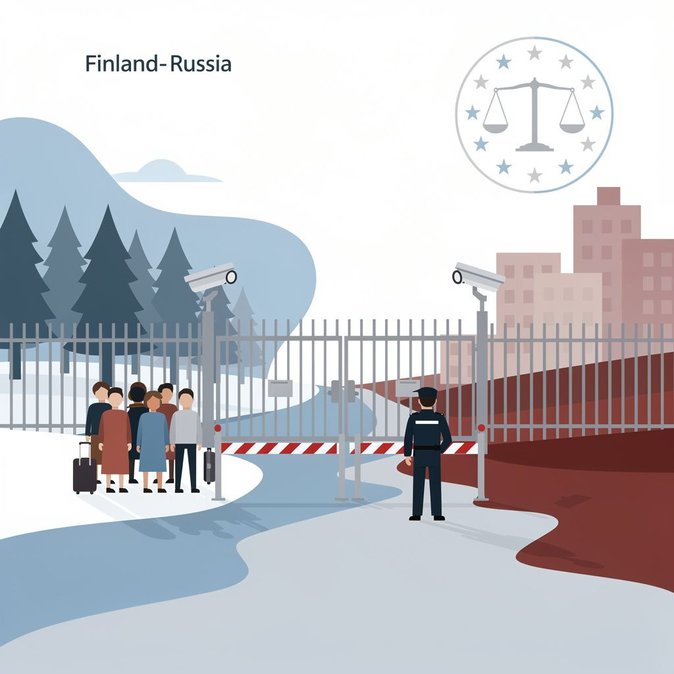
Finland’s Eduskunta (Parliament) voted on 18 November 2026 to prolong the temporary Border Security Act—popularly known as the ‘pushback law’—for another two years, until 31 December 2028. The measure allows Border Guard officers to turn back asylum-seekers who arrive at the eastern frontier in circumstances that the government deems “instrumentalised” by a foreign power, principally Russia. The Act was first adopted in July 2024 as a response to a sudden surge in irregular arrivals on bicycles at the Salla and Vaalimaa crossing points. It has already been extended once. Interior Minister Mari Rantanen (Finns Party) told legislators that Russia’s war in Ukraine and its deteriorating relations with NATO make an easing of border pressure unlikely. “Hybrid influence using migration remains a credible threat. We must be able to react quickly to protect public order and national security,” she said. The government argues the law is narrowly framed, activated only by cabinet decree, and complies with international refugee-law obligations because humanitarian exemptions remain in place for vulnerable persons. Opposition MPs from the Greens and Left Alliance, along with some SDP back-benchers, counter that the renewal undermines Finland’s constitutional right to seek asylum and risks breaching the non-refoulement principle. Former Prime Minister Antti Rinne warned that “temporary” emergency powers are becoming permanent, calling for stronger parliamentary oversight. For global-mobility managers the extension means the eastern land border—closed to ordinary travellers since December 2023—will stay tightly controlled for the foreseeable future. Companies moving staff between Finland and Russia must continue to route travellers through air or sea corridors (currently via Istanbul, Belgrade or Dubai) and factor longer lead times for work-permit processing in Moscow and St Petersburg. The law also signals that Finnish authorities will maintain heightened scrutiny of visa and residence-permit applicants they believe could be linked to state-directed migration flows. Practically, mobility teams should review emergency-evacuation and duty-of-care plans for expatriates in Finland’s eastern regions, ensure Russian assignees have multi-entry Schengen visas not dependent on land crossings, and monitor forthcoming government decrees that could further restrict entry or expand the definition of ‘instrumentalised migration’.
Source: Yle News