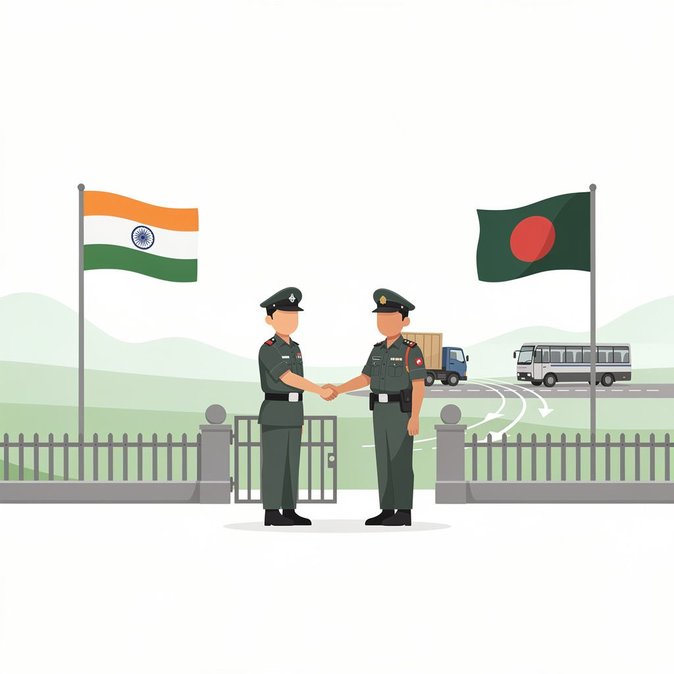
A Border Security Force (BSF) constable who inadvertently crossed nearly 200 yards into Bangladesh’s Sylhet district on 17 November was handed back with his service rifle after a flag-level meeting between the BSF and Border Guard Bangladesh (BGB) early on 18 November. The incident occurred in the Bichanakandi area, a popular river-trekking spot for tourists from both countries. Such crossings are not uncommon along unfenced stretches of the 4,096-km India-Bangladesh frontier, yet they can trigger diplomatic friction if not resolved swiftly. In this case, established standard-operating procedures—joint verification, medical check and documentation—were completed within 12 hours, underscoring improved communication channels created under the 2022 Coordinated Border Management Plan. Analysts note that rapid de-escalation is crucial for sustaining the steady growth of cross-border trade and people movement: Petrapole-Benapole land port alone handles about 60 per cent of bilateral surface commerce, while an estimated 6,000 legal travellers use integrated check posts daily. Any prolonged standoff risks shipment delays and visa processing bottlenecks. For corporate travellers and logistics firms, the takeaway is that while isolated incidents persist, the bilateral mechanism to resolve them is functioning. Mobility managers should, however, remind employees on assignment in border-adjacent projects—such as the Akhaura–Agartala rail link or Northeast road corridors—to carry accurate location devices and heed BSF movement advisories. Both forces have announced joint public-awareness campaigns in border villages ahead of the December peak-season rush, aiming to reduce accidental crossings by farmers, tourists and security personnel alike.
Source: India Today NE