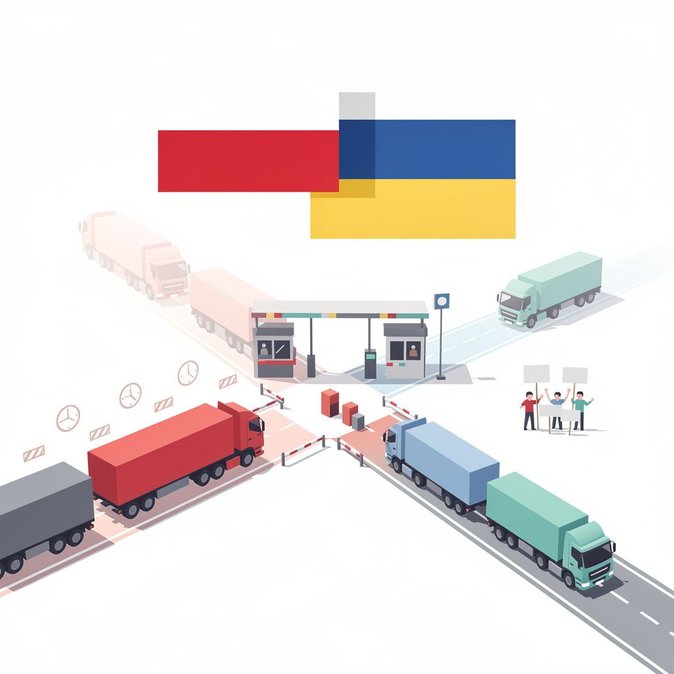
The Ukrainian news agency Ukrinform reported on 17 November that Warsaw and Kyiv have agreed to prioritise the fast exit of empty trucks through the Yahodyn, Rava-Ruska and Krakivets checkpoints, where Polish hauliers have been blocking freight traffic since 6 November. As of Wednesday morning, some 2,400 trucks were still waiting on the Polish side—down from 4,000 last week. Polish carriers want EU-era permits for Ukrainian drivers reinstated, arguing that duty-free access granted after Russia’s invasion has undercut them. Talks mediated by the European Commission are slated for Brussels on 20 November, but hauliers say they will maintain a “go-slow” protest until concrete quotas are offered. The standoff has hit just-in-time supply chains for automotive plants in Silesia and Małopolska, forcing companies to reroute via Slovakia or use rail modes. Logistics analysts estimate that delivery times to Kyiv are up to 72 hours longer, raising transport costs by 25 %. Insurers warn that perishable-goods cover may lapse if delays exceed 48 hours; exporters are urged to update policy riders. Both governments have instructed border guards to create green lanes for medical supplies and defence cargo, but implementation remains patchy. Mobility advisers recommend that corporate drivers carry bilingual letters citing the green-lane directive and allow for overnight parking near Przemyśl or Lublin before attempting to cross. If talks fail, the Association of Polish International Road Transport Employers (OZPTD) threatens a full closure from 24 November, which would severely disrupt expat staff moves between Poland and Ukraine ahead of the holiday period.
Source: Ukrinform