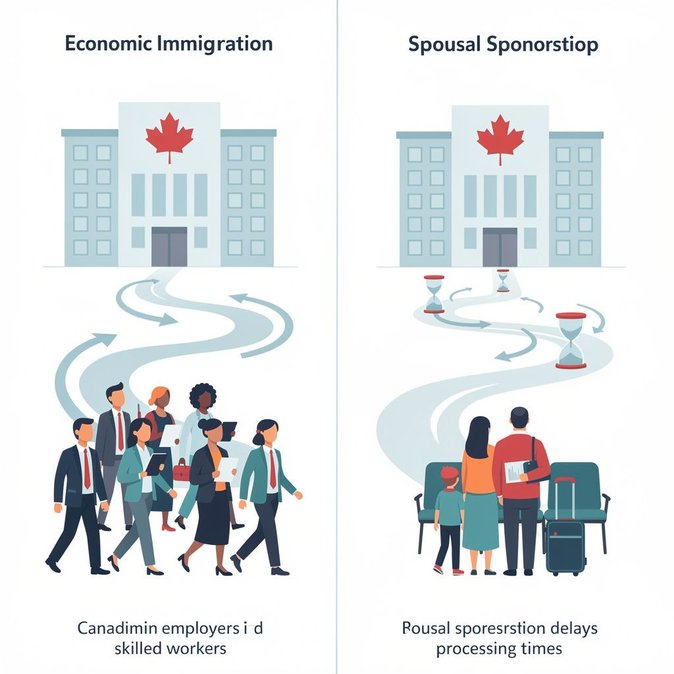
IRCC’s 17 November processing-time update, analysed on 19 November by IRCC.com, shows incremental gains across most economic-immigration categories while family-class applications face fresh headwinds. Median processing for Federal Skilled Worker files has fallen to 5.8 months from 6.1 months in October, and Canadian Experience Class times are holding steady at 4.2 months. By contrast, spousal-sponsorship estimates rose by a full month to 13 months for out-land cases and 9 months for in-Canada filings. Officials attribute the divergence to a reallocation of staff toward Express Entry inventory after the November rule changes, and to a seasonal surge in spousal submissions ahead of the holiday travel period. The net effect is quicker permanent-residence pathways for high-skilled workers but longer family reunification waits—a politically sensitive trade-off that Ottawa insists is temporary. For employers, shorter economic-stream times reduce the window between offer acceptance and permanent-residence landing, easing project-staffing timelines. HR departments should, however, monitor bridging open-work-permit expiry dates for spouses accompanying principal applicants, as protracted sponsorship processing can leave families in status limbo. Immigration consultants recommend that family sponsors submit complete police-certificate and medical documentation upfront and avoid mixed-category filings (for example, combining dependent children with spouses) to minimise holds. IRCC is expected to refresh processing-time targets in the 2027 departmental plan due out in February.