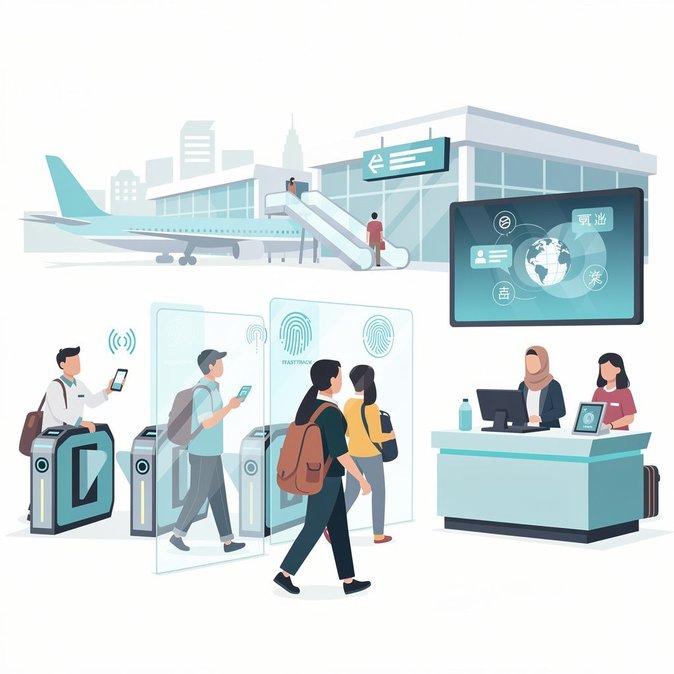
Speaking at his post-summit press conference on 19 November, Foreign Ministry spokesperson Guo Jiakun outlined President Xi Jinping’s new commitments to **“facilitating travel for business, tourism and other purposes”** across the Asia-Pacific. The pledge forms one of four pillars in the *Shenzhen Vision*, the APEC Leaders’ Declaration unanimously adopted earlier the same day. According to the statement, China will work with regional partners to harmonise entry rules, improve infrastructure connectivity, and align regulations under future Free-Trade-Area-of-the-Asia-Pacific (FTAAP) negotiations. Analysts say this could translate into streamlined visa-approval timelines, expanded mutual-recognition of health certificates and wider acceptance of the APEC Business Travel Card, whose maximum stay was quietly extended from 60 to 90 days on 1 November. Corporate mobility managers view the rhetoric positively but stress the need for concrete timelines. “What multinationals want is predictability—knowing that a field engineer can land tomorrow without last-minute paperwork surprises,” notes Lu Meng, APAC mobility lead at a U.S. semiconductor firm. 2023 saw China restore most visa classes after pandemic closures, yet short-notice policy shifts remained a pain-point. Beijing is already piloting harmonised ‘document-free’ e-channels at several Hong Kong-Shenzhen crossings, and sources at the National Immigration Administration suggest that a cloud-based visitor database for frequent business travellers could launch in early 2027. If implemented, China would join Singapore and the United Arab Emirates in offering near-real-time, API-driven border clearance. For now, Xi’s declaration signals political will—an essential first step toward re-energising intra-APEC mobility and, by extension, supply-chain resilience and trade growth.