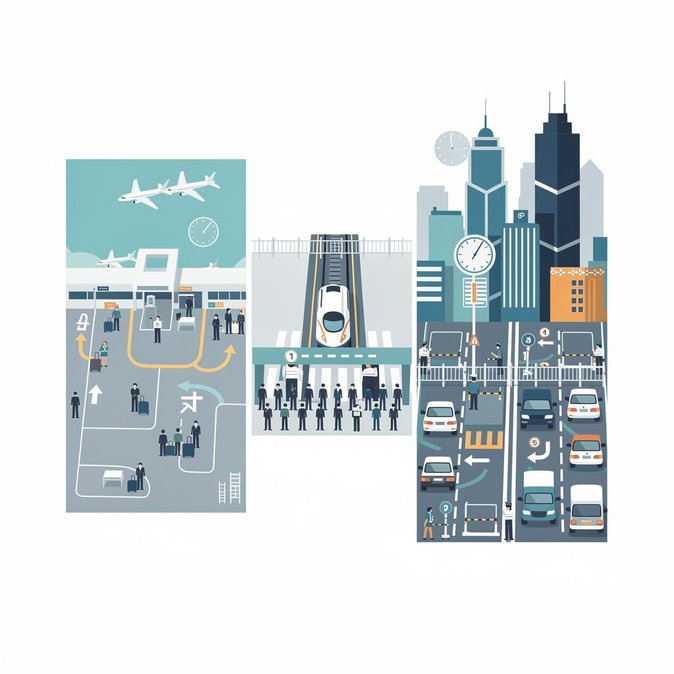
China’s hosting of the 33rd Asia-Pacific Economic Cooperation (APEC) Leaders’ Week in Shenzhen on 18-19 November has produced the first real test of the rebuilt cross-border infrastructure linking the mainland to Hong Kong since full post-pandemic reopening. In guidance updated on 19 November, the MFA consular-affairs advisory service warns foreign delegates and business travellers that airports, railway stations and land checkpoints with Hong Kong will be “much busier than usual” over the summit period and urges travellers to allow additional time for security checks and immigration formalities. Shuttle schedules published by the APEC CEO Summit secretariat show dedicated coaches running every hour between Bao’an International Airport, Shenzhen North high-speed-rail station, Shekou Cruise Home Port and Huanggang checkpoint to the official hotels from 14–16 November, and in the reverse direction on 19–20 November. The same logistics note instructs participants arriving without an APEC Business Travel Card (ABTC) to apply for the appropriate Chinese visa in advance, while ABTC holders may remain visa-free for up to 60 days. To minimise congestion around the conference venue in Qianhai, the Shenzhen municipal government has imposed a vehicle cordon and urged attendees to rely on the organiser’s buses; taxis and private cars require special permits. Travellers transiting through neighbouring Hong Kong are also advised that temporary crowd-management measures, including queuing pens and police-escorted bus lanes on Fanling and San Tin highways, may be activated at short notice during leaders’ motorcades. Corporate mobility managers moving staff into or through the Greater Bay Area this week should factor in possible last-minute checkpoint closures or metro station lockdowns and build flexible buffers into itineraries—especially for same-day commercial meetings in Shenzhen or Guangzhou.