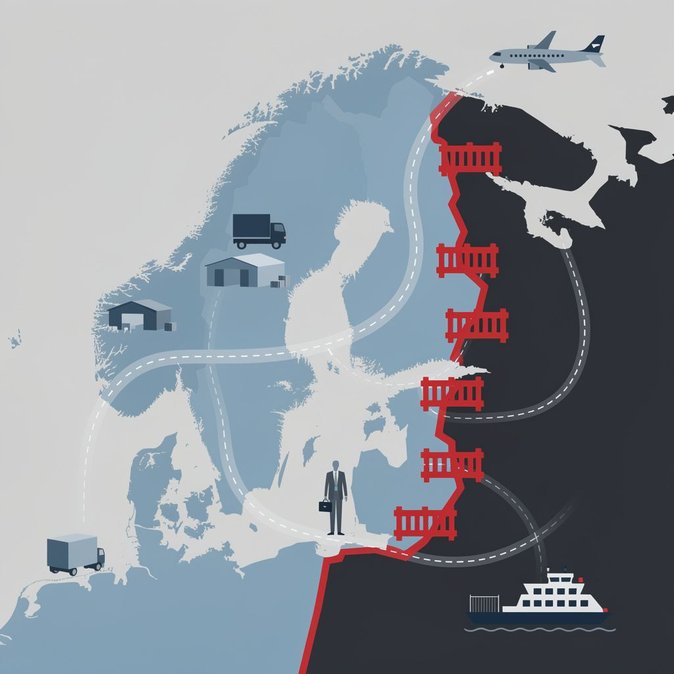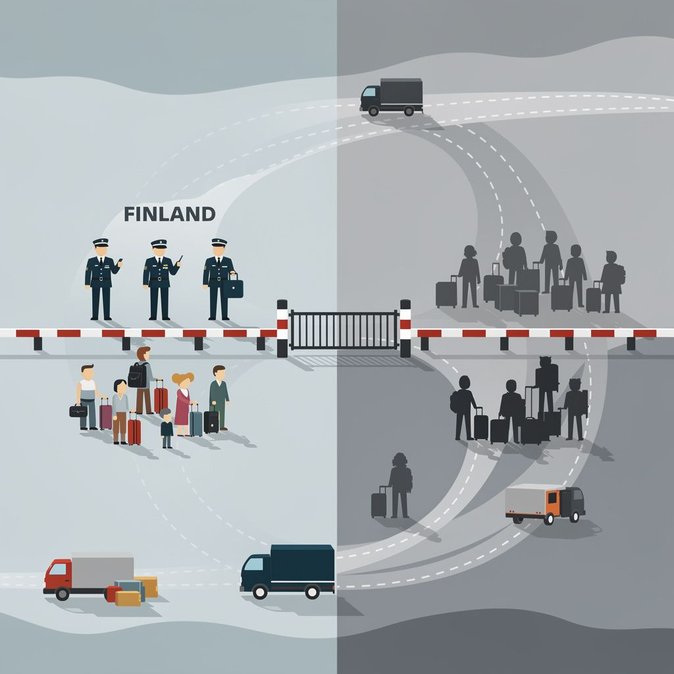
Finland’s Eduskunta (parliament) has voted by 170–19 to keep in force the exceptional law that allows border guards to refuse asylum applications at the country’s land frontier with Russia until 31 December 2028. Originally adopted in July 2024 as an emergency response to what Helsinki describes as “instrumentalised migration”, the legislation empowers the Finnish Border Guard to turn away people who attempt to request protection if officials believe a foreign power is deliberately funnelling them toward Finland to exert political pressure. Interior Minister Mari Rantanen told lawmakers on Wednesday that although crossings have been closed since December 2023, intelligence indicates that Moscow is still prepared to stage large-scale movements of migrants toward the 1 300-kilometre boundary. “The hybrid threat has not abated—we must ensure our officers retain the legal tools to react quickly,” she said. Human-rights organisations, including UNHCR and the Finnish Refugee Advice Centre, criticised the extension, arguing that it breaches the non-refoulement principle and Finland’s constitutional right to seek asylum. Government lawyers countered that the measure is a narrowly framed derogation permitted under Article 72 of the Schengen Borders Code and applies only in clearly defined, high-risk situations. For global mobility managers the decision cements a more restrictive environment for at least the next two years. Companies moving non-EU personnel through St Petersburg–Helsinki land routes must continue to reroute via air or sea, adding cost and time. Logistics providers should also note that the law authorises ad-hoc temporary zones near official crossings where entry is prohibited. Practically, the extension means that Finland’s status as the sole Schengen country with a completely sealed land border to Russia will persist, compelling travellers and freight to use alternative corridors through Estonia or the Baltic Sea ferries. HR teams are advised to brief assignees on potential documentation checks at airports, where border officers are increasingly scrutinising travel histories from Russia.
Source: Anadolu Agency