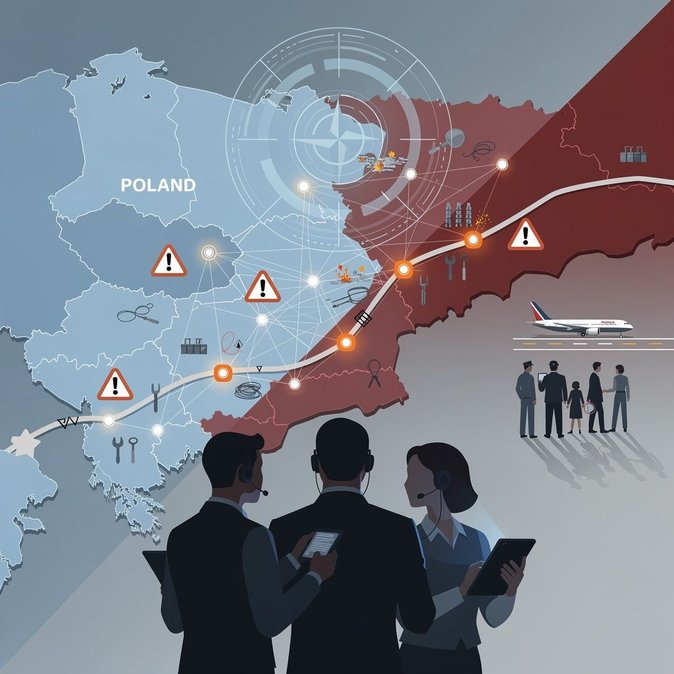
The Polish Border Guard has wrapped up a two-day enforcement campaign codenamed “Pobyt”, carried out across the Silesia and Opole regions on 17–18 November. Officers inspected 72 accommodation sites and 17 workplaces, verifying the status of 303 foreign nationals. Fifty-two people were found to have breached immigration or labour rules; forty-five received administrative orders to leave Poland, while two—citizens of Georgia and Colombia—were placed in secure detention pending further proceedings. Three criminal investigations were opened over forged documents and drug possession, and one employer was charged with illegally hiring foreign staff. A Serbian national suspected of organising irregular border crossings was also arrested. The Border Guard stressed that such multi-agency sweeps are now conducted regularly in industrial hubs where demand for migrant labour is highest. For HR and mobility managers the message is clear: expect tighter spot-checks on residence permits, contracts and minimum-wage compliance, especially in manufacturing and logistics corridors around Katowice. Employers should audit their foreign-worker files and ensure translation of contracts into Polish where required. Failure to do so can trigger fines of up to PLN 30,000 and a ban on hiring non-EU nationals. Legal advisers point out that Poland’s Entry-Exit System (EES) went live in April 2026, giving authorities instant access to biometric overstay data. “Pobyt” demonstrates how that data is now feeding into field operations. Companies with high-volume seasonal hiring should build buffer time into onboarding schedules and consider using the government’s new online appointment system for residence cards to avoid processing backlogs.
Source: Komenda Główna Straży Granicznej