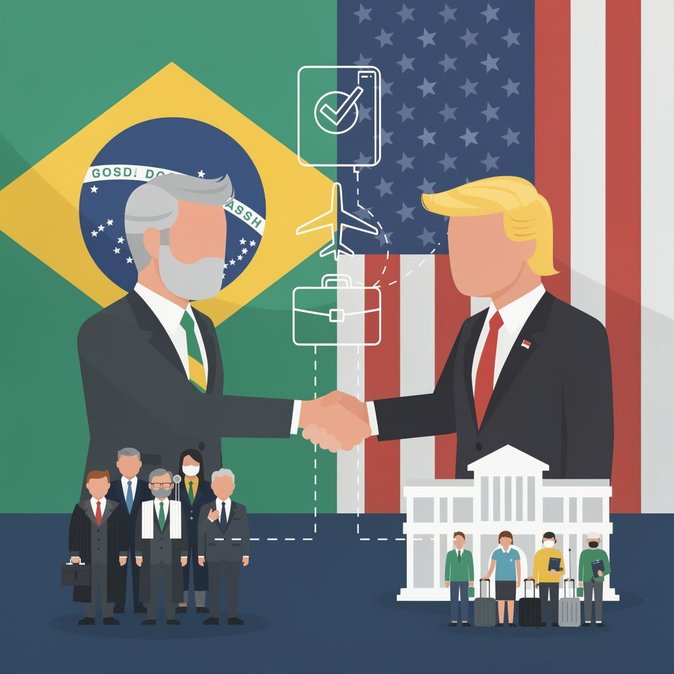
Presidential aides say any tête-à-tête between President Luiz Inácio Lula da Silva and U.S. President Donald Trump at the 3–4 December G20 meeting in Miami hinges on a reciprocal thaw in visa restrictions. Brazil wants the United States to reinstate visas for its ambassador in Washington and for senior ministers and Supreme Court justices whose credentials were revoked in 2025, while indicating it will grant agrément to U.S. ambassador-designate Daniel Perez in return. The “visa war” began when Washington pulled diplomatic visas over human-rights concerns linked to Brazil’s 2023 insurrection investigations; Brasília responded by slow-walking U.S. diplomatic appointments. Business travel between the two countries has since faced longer appointment times at consulates and stricter secondary screening at airports. For multinationals the prospective deal could normalise processing times for official and service passports and ease the issuance of A-3/G-5 visas for Brazilian officials attending World Bank and UN meetings—often a bellwether for wider consular capacity. Corporates should nevertheless monitor for lingering Section 301 trade-tariff disputes that could derail the swap. Sources in Itamaraty suggest talks may extend to restoring Brazil’s interview-waiver programme for B-1/B-2 renewals, suspended during the spat, which, if revived, would immediately shorten wait-times for senior executives. Conversely, failure to clinch an agreement could see the stand-off harden, with new congressional moves in Washington to scrutinise Brazilian officials’ access to the U.S. financial system. Either way, mobility teams are advised to schedule U.S. visa appointments well in advance and keep invitation letters detailing urgency at hand until the diplomatic dust settles.
Source: SBT News