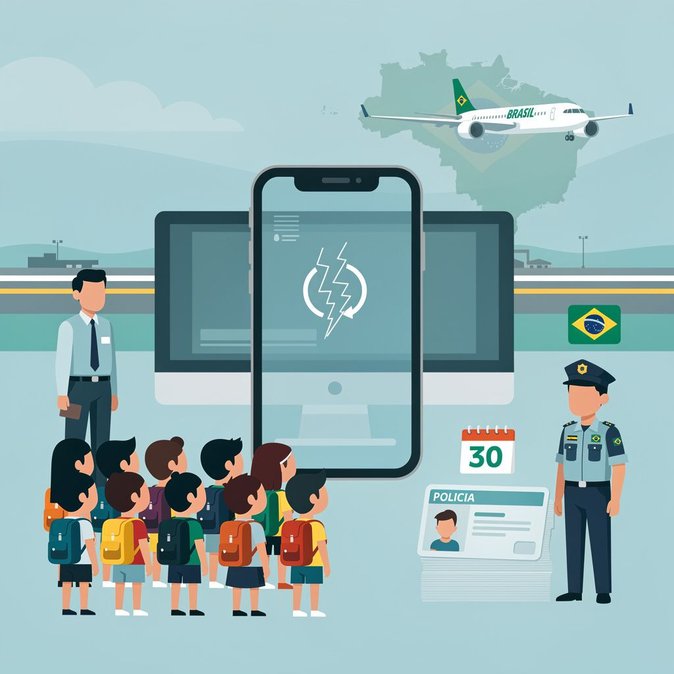
A federal judge in Pacaraima, Roraima, has given Brazil’s Federal Police (PF) 48 hours to design and issue a provisional identity document for 17 Venezuelan minors who have been unable to board domestic flights because the PF’s National Migratory Registration System (SisMigra) has been offline nationwide for days. Without the system, the children—whose home country does not issue photo IDs to under-nines—were left with only birth certificates, which airlines refused to accept. The ruling specifies that the temporary certificate must include a recent photo and full biographic data, be free of charge, and remain valid for 30 days (renewable while SisMigra is down). The PF faces fines of R$ 5,000 per day if it misses the deadline. The decision came after the Public Prosecutor’s Office and the Federal Public Defender filed a collective suit arguing that a government IT failure cannot suspend a child’s constitutional right to freedom of movement. For mobility professionals the episode is a red-flag reminder that Brazil’s digital immigration platforms—critical for residence permits, renewals and work-card issuance—lack robust redundancy. Companies relocating staff should keep hard-copy records and monitor PF system status in real time to avoid missed flights and legal-stay deadlines. Airlines operating the Amazon corridor have been instructed to recognise the new document once issued, but carriers may apply additional verification, so travelers should arrive early and carry supporting paperwork. The ruling currently covers only Venezuelan children processed in Roraima, yet lawyers expect similar injunctions elsewhere if the outage persists. Longer term, the Ministry of Justice says a SisMigra overhaul will migrate services to the gov.br cloud by mid-2027; until then, contingency protocols—including mobile enrolment teams at border crossings—are likely to become part of Brazil’s migration toolbox.
Source: JusConsulta