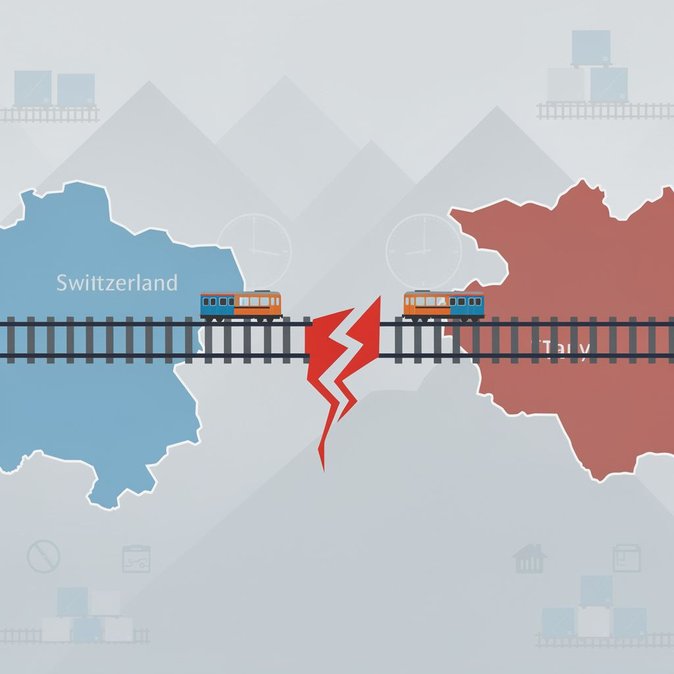
A 24-hour rail strike called by Italian unions CUB Trasporti and SGB began at 21:00 on Friday 20 November, halting large parts of the Trenitalia, Trenord and Italo networks. While the action is domestic, the knock-on effects were felt immediately on Swiss cross-border routes: Swiss Federal Railways (SBB) and its joint venture TILO cancelled or curtailed dozens of services between Ticino and Milan, including RE80 and S10 connections to Como and Malpensa Airport. SBB warned that only a limited “guaranteed service” would run during commuter protection windows, and advised travellers to postpone non-essential journeys or seek long-distance coaches. Geneva–Milan EuroCity services were also subject to rolling cancellations because Italian crews could not be guaranteed. Freight trains crossing the Luino and Chiasso corridors faced lengthy pathing delays, disrupting just-in-time supply chains for Swiss exporters. For the roughly 76,000 Italian residents who commute daily into southern Switzerland, the stoppage risked missed shifts and overtime costs for employers. Several Ticino-based manufacturers activated contingency plans, arranging charter buses from border park-and-ride lots and allowing remote work where possible. Hotels near Lugano station reported a surge in last-minute bookings from travellers stranded after evening trains were pulled from the timetable. Although the strike is scheduled to end at 20:00 on Saturday 21 November, SBB says residual delays could last through Sunday as rolling stock and crews are repositioned. Global-mobility teams with transferees moving between Swiss and Italian offices should monitor SBB’s international traffic updates and consider flexible ticketing options to absorb further industrial-action risk ahead of the peak Christmas period.
Source: Associated Press / TILO alert