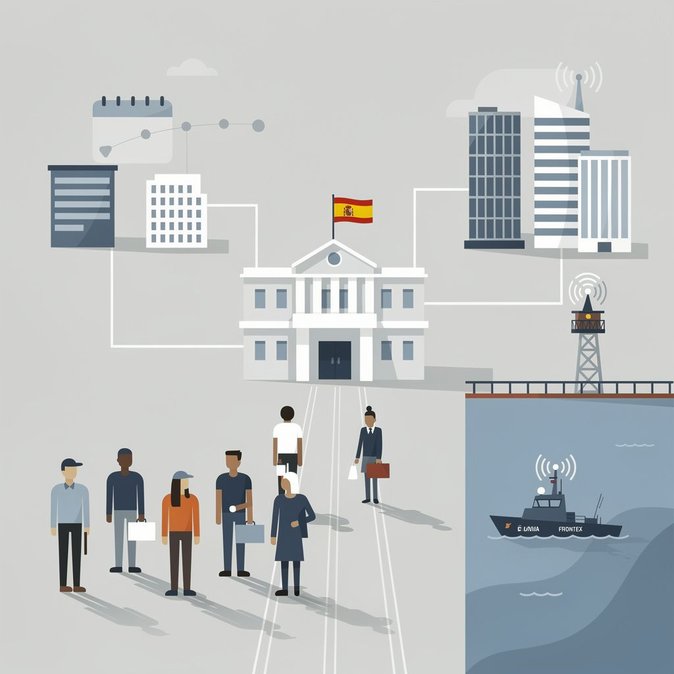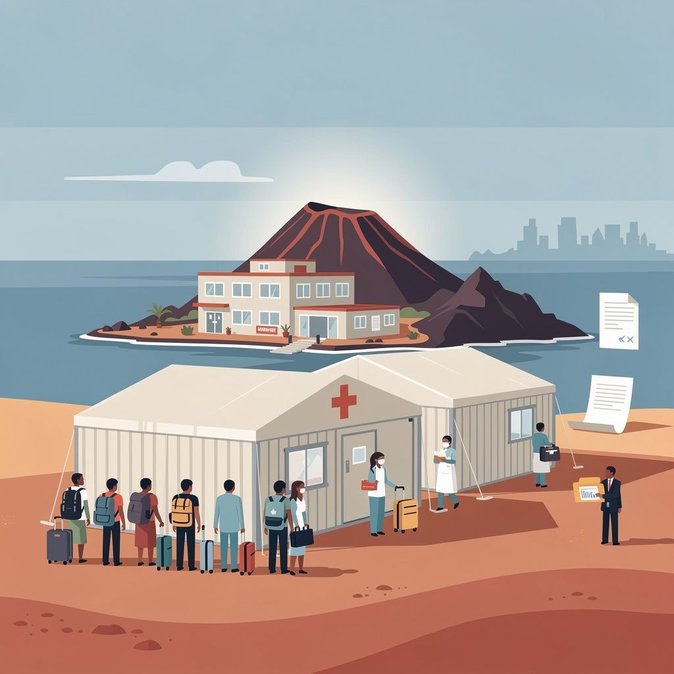
Spain’s Ministry of Health has erected a 120-bed field hospital next to the CATE reception centre in San Andrés, El Hierro, after more than 11 000 people arrived on the Canary Island in the first 19 days of November. Doctors working on the Atlantic migration route say the temporary facility is already receiving dehydration, hypothermia and trauma cases straight from Salvamento Marítimo rescues. The hospital is equipped with triage tents, an X-ray unit and eight intensive-care bays, and can be expanded to 160 beds if arrivals continue at the current pace. The move follows the central government’s declaration of a “migration emergency” for the archipelago on 15 November and the release of an extra €5 million in crisis funds. Officials admit the measure is a stop-gap: El Hierro’s only permanent hospital has 147 beds, a number now matched almost daily by new arrivals. Transferring migrants to Tenerife and the mainland remains the medium-term plan, but medical screening must be completed locally before onward travel. For employers, the field hospital underlines likely delays in processing humanitarian work permits and social-security enrolment: Red Cross staff say they are prioritising minors, pregnant women and trauma cases, pushing document checks to the back of the queue. International assignees posted to the Canaries should prepare for pressure on accommodation and local transport while emergency resources are redeployed. The Canary Islands crisis has become a flashpoint in the 29 November general election. Opposition parties accuse Prime Minister Sánchez of improvisation, while the government argues that 9 500 people have already been transferred off El Hierro this month — evidence, it says, of an organised response. Regardless of the political outcome, businesses with inter-island mobility programmes should expect tighter health-and-safety protocols at all Canary ports and airports this winter.
Source: Euronews