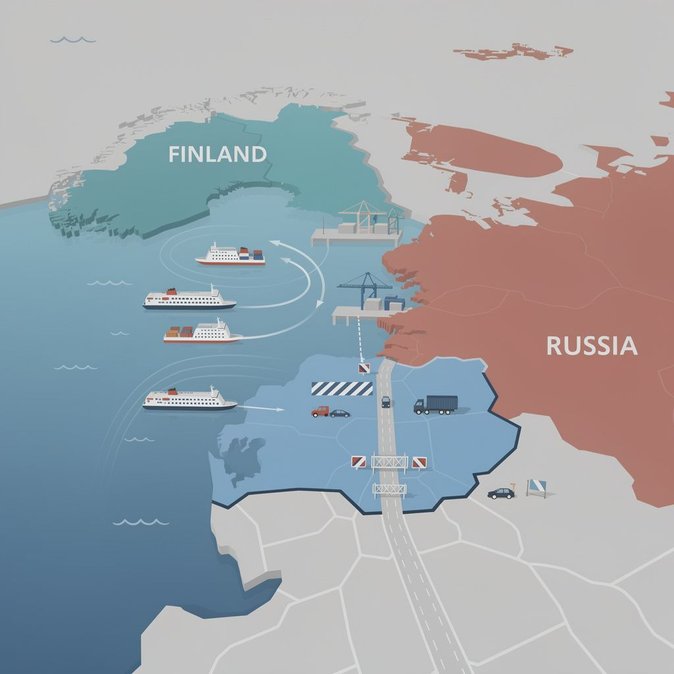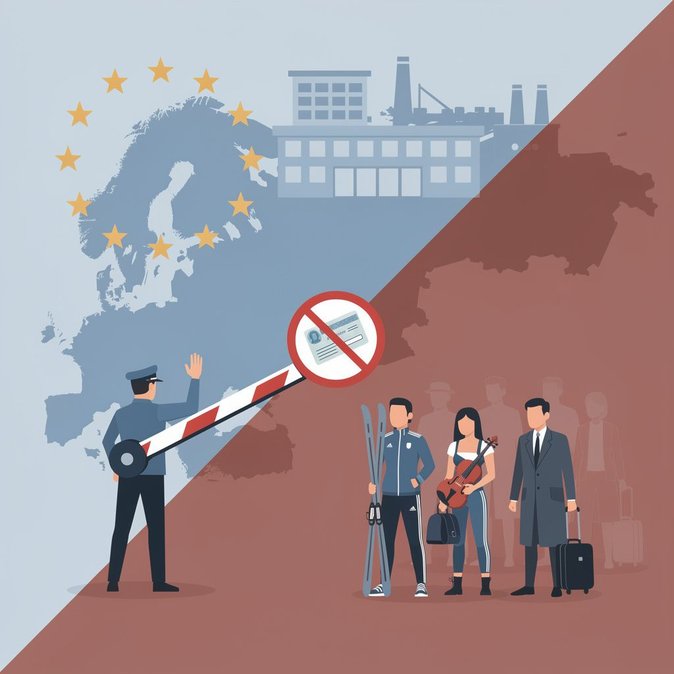
Finland has moved to close the remaining loopholes that allowed Russian citizens to enter the country for short-term work or sporting events. In a detailed Frequently-Asked-Questions bulletin published on 19 November, the Ministry for Foreign Affairs explains how the Government Resolution of 12 November 2026 is now being applied by embassies, border guards and police authorities. Under the previous 2023 policy, Schengen visas could still be issued to Russians for temporary work such as professional sport, performing arts or seasonal harvesting. From 16 November, that option is gone. Visas and entry will only be granted if the work is “essential for Finland’s national interests”, for example emergency maintenance of critical infrastructure or supply-chain security tasks. Athletes— even those competing under a neutral flag— as well as coaches, referees, artists and interpreters are explicitly included in the ban. The resolution also closes a geographic loophole: the restrictions apply regardless of the country from which a Russian citizen tries to enter Finland, and regardless of which Schengen state issued their visa. Border officials can refuse entry and the police can remove individuals already in the country if their purpose is deemed non-essential. For companies the immediate impact is two-fold. First, Russian subcontractors and specialists can no longer be flown in for quick repair jobs unless they qualify for the narrow “national interest” exemption, increasing the need to source EU-based personnel. Second, sports promoters and cultural venues must review event calendars; Russian performers will not be granted entry even if they hold valid multi-entry Schengen visas issued elsewhere. Employers that still wish to hire Russian talent must switch to the slower residence-permit route. Finnish authorities stress that the policy targets short-stay visas only; it does not affect holders of residence permits issued by another EU or Schengen country, nor does it limit the right to seek asylum. Nevertheless, the move aligns Finland more closely with the Baltic states’ hard-line stance and is likely to further reduce cross-border traffic, which has already plummeted since Helsinki closed all road checkpoints with Russia in 2023.