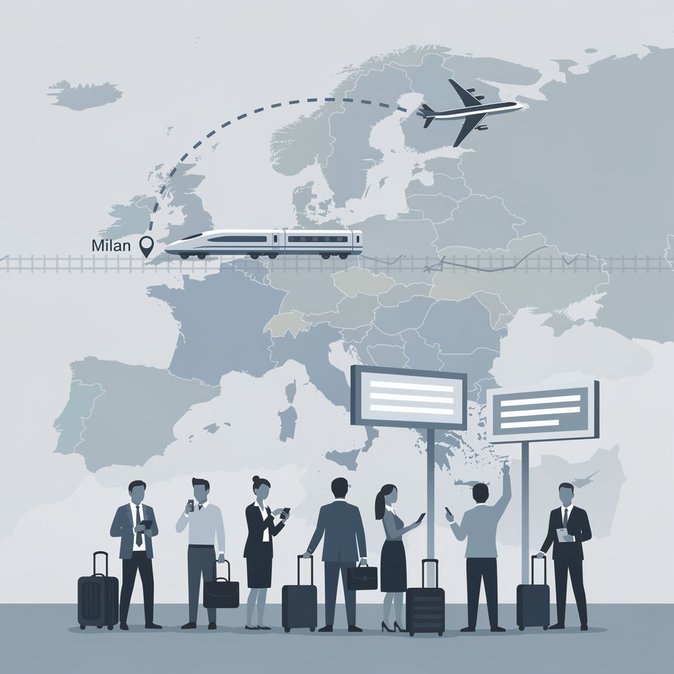
A 24-hour general strike called by Italy’s largest trade-union federation, CGIL, on 20 November disrupted public services in more than 100 cities—from Milan and Turin to Naples and Palermo—and created headaches for French companies with regional operations. Although airline and air-traffic-control unions cancelled their planned walk-out at the last minute, separate airport-personnel stoppages are still scheduled for 22 November at Milan Malpensa and Venice. International high-speed rail links were particularly affected. Trenitalia’s Frecciarossa services between Milan and Paris were reduced, while some TGV-Inoui trains terminated at the border station of Modane, requiring coaches to Lyon Part-Dieu. Road freight at Mont Blanc and Fréjus saw minor queues as logistics firms diverted time-sensitive loads. For mobility managers the lesson is clear: even strikes confined within one member-state can have material knock-on effects across Schengen, especially on multi-country projects that rely on seamless movement of personnel and equipment. Contingency planning should therefore account for domestic labour actions in neighbouring countries. French consular posts in Italy reported normal operations but warned visa applicants to allow extra travel time to reach appointment centres. The Foreign Ministry’s Crisis Centre reminded French nationals to consult the Travel Advice portal before departure.
Source: Associated Press